

Home improvements can raise a property’s value, but not every upgrade pays back the same way. In both the USA and Canada, real estate agents evaluate renovations by translating “what was changed” into “what buyers will pay” under current local conditions. That evaluation is less about personal taste and more about comparable sales, risk, market demand, and whether the work is permitted, durable, and appropriate for the neighbourhood.
This guide explains how agents assess improvements with a practical, step-by-step approach you can use before you spend money.
Contents
- 1 Start With the Market, Not the Project List
- 2 Use Comparable Sales to Estimate What Buyers Actually Pay For
- 3 Prioritize Improvements That Reduce Buyer Risk
- 4 Evaluate Kitchen and Bath Updates With a Scope-and-Finish Lens
- 5 Measure Value Impact by Category: “Adds Space,” “Improves Utility,” or “Improves Presentation.”
- 6 Confirm Permits, Documentation, and Hidden Deal Killers
- 7 A Practical Decision Framework You Can Use Before Renovating
Start With the Market, Not the Project List
Agents begin with the market because value is buyer-driven. The same renovation can perform differently depending on:
- Neighbourhood price band: In entry-level markets, buyers often prioritize functional updates and reliable systems. In higher-end segments, design cohesion and premium finishes can matter more.
- Supply and demand: In a seller’s market, “good enough” improvements may still sell well. In a balanced or buyer’s market, condition and presentation matter more.
- Buyer profile: Urban condos, suburban family homes, and rural properties each attract different priorities (parking, storage, energy costs, outdoor space, accessibility).
- Season and local norms: Some markets expect central air, others expect snow-ready features, and many buyers now screen for home office potential.
Practical takeaway: Before choosing upgrades, define the likely buyer and the competing listings they will compare you to.
Use Comparable Sales to Estimate What Buyers Actually Pay For
Agents typically rely on “comps,” recent nearby sales that are similar in size, style, lot, and condition. They look for differences that can be priced, such as an added bathroom, a renovated kitchen, or a finished basement.
A real estate agent with market knowledge and expertise helps translate renovation choices into measurable, local price differences.
How this works in practice:
- Match first, adjust second: Agents prioritize the most similar sold properties, then adjust for key differences. A fully renovated home may set the ceiling if it is truly comparable in location and layout.
- Separate “marketing appeal” from “appraisal support”: A beautiful upgrade can attract stronger offers, but the final value still needs support from comparable sales and, when financing is involved, appraisal standards.
- Watch for “over-improvement”: If your home becomes the most upgraded home on the street by a wide margin, you may not recover the full cost because buyers anchor to neighbourhood limits.
Practical takeaway: ask for a comps-based range for “as-is” value and “after-improvements” value, not just opinions about what looks nice.
Prioritize Improvements That Reduce Buyer Risk
Many value gains come from reducing uncertainty. Buyers discount homes that feel risky, even if the issues are not catastrophic.
Agents often place high importance on:
- Roof age and visible condition
- Electrical safety and capacity (including panel condition)
- Plumbing reliability (leaks, old supply lines)
- Heating and cooling performance
- Moisture control (attic ventilation, basement dampness, grading, gutters)
In the USA, buyers frequently use inspection contingencies and may negotiate repairs or credits. In Canada, buyers often include conditions for inspection and financing, and lenders can be sensitive to property condition depending on the situation. Either way, deferred maintenance tends to create price pressure or negotiation friction.
Practical takeaway: “unsexy” improvements can protect value by preventing deal issues and keeping negotiations stable.
Evaluate Kitchen and Bath Updates With a Scope-and-Finish Lens
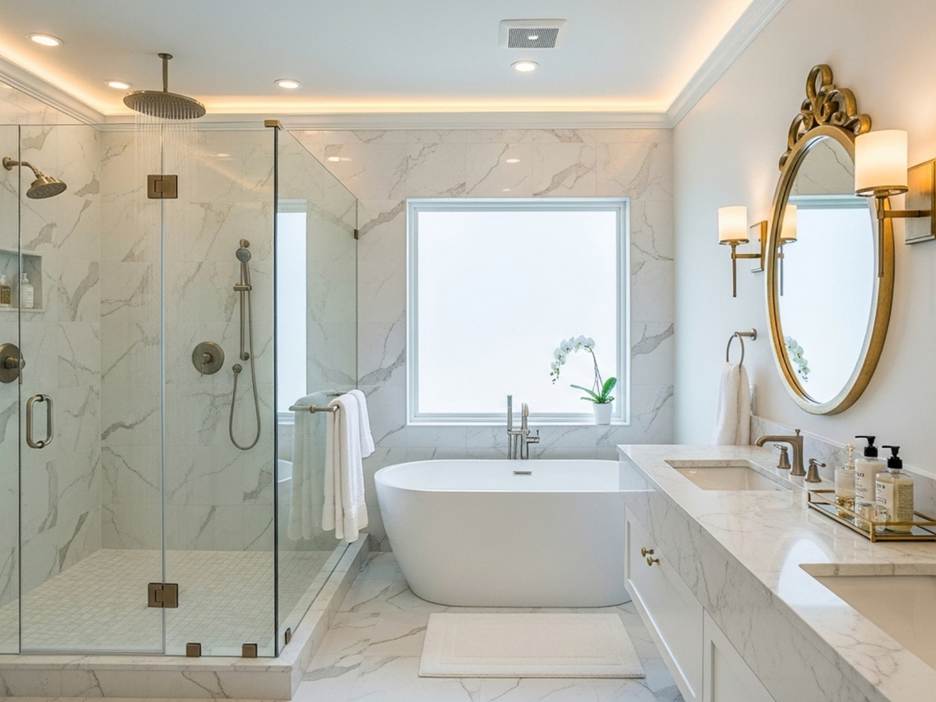
Kitchens and bathrooms can influence perceived value because buyers notice them immediately and associate them with cost and disruption. Agents evaluate these renovations by asking:
- Is the layout functional? Flow, storage, and countertop space can matter more than luxury materials.
- Are the finishes consistent with the segment? In mid-range homes, durable and cohesive finishes can outperform niche, high-maintenance selections.
- Was the work done professionally and to code? Poor workmanship can erase the value of the upgrade and raise inspection concerns.
- Are core items updated? Cabinets, counters, appliances, plumbing fixtures, and lighting should align. A new countertop on failing cabinets rarely reads as “renovated.”
Practical takeaway: the best value often comes from targeted, coherent upgrades rather than partial changes that highlight what is still outdated.
Measure Value Impact by Category: “Adds Space,” “Improves Utility,” or “Improves Presentation.”
Agents usually group improvements into three buckets, then evaluate how buyers in that area pay for each.
A) Adds Space or Livable Area
Examples: finishing a basement, adding a bathroom, legal suite conversions (where permitted), and adding a bedroom.
What agents check:
- Ceiling height, egress windows, heating, moisture control, and whether the space is counted as a finished living area by local norms.
- In Canada, “legal” secondary suites involve specific municipal and building code requirements. In the USA, rules vary by city and county. Unpermitted conversions can add risk even if buyers like the idea.
B) Improves Utility and Efficiency
Examples: insulation upgrades, high-efficiency HVAC, heat pumps, windows, air sealing.
What agents check:
- Documentation of upgrades and the credibility of performance claims.
- In the USA, buyers may recognize ENERGY STAR equipment and HERS concepts depending on the region. In Canada, EnerGuide ratings and provincial efficiency programs are more familiar. Regardless, the monthly operating cost matters most.
C) Improves Presentation and First Impression
Examples: paint, lighting, flooring, staging, landscaping, exterior refresh.
What agents check:
- Whether improvements create a “move-in ready” impression that increases competition.
- Curb appeal factors: front door, driveway condition, exterior lighting, tidy planting, and clean walkways.
Practical takeaway: presentation upgrades can boost demand quickly, while utility upgrades can defend pricing by lowering perceived future costs.
Confirm Permits, Documentation, and Hidden Deal Killers
A significant part of an agent’s evaluation is verifying the improvement is sale-ready and defensible.
Common items that affect value or negotiations:
- Permits and inspections: Unpermitted structural changes, electrical work, plumbing, decks, additions, and finished basements can create buyer or lender concerns.
- Condo rules: For condos, improvements may be limited by bylaws, and major changes might require approvals.
- Materials and safety issues: Knob-and-tube wiring (in some older Canadian homes), outdated aluminum wiring (in some regions), recalled products, or improper venting can trigger renegotiation.
- Insurance implications: Some improvements affect insurability or premiums (wood stoves, older wiring, roof age).
Practical takeaway: keep invoices, permits, warranties, and before-and-after photos. Documentation reduces uncertainty and supports your pricing story.
A Practical Decision Framework You Can Use Before Renovating
Use this quick workflow to decide what to do and what to skip:
- Define your goal: sell soon, rent, or live long-term. Value-driven decisions differ from lifestyle upgrades.
- Get a local comps review: identify the top 3 to 5 features that separate higher-priced sales from the rest.
- Fix risk first: water, roof, electrical, HVAC, and structural concerns.
- Choose a “cohesion plan”: align floors, paint, lighting, temperature, and hardware so the home feels intentionally updated.
- Avoid over-customization: very bold finishes can narrow your buyer pool.
- Estimate net benefit: compare cost and disruption to the likely impact on sale price and time on market.
- Time it right: complete messy work before cosmetic work, and finish with deep cleaning and professional photos.

Real estate agents evaluate improvements by connecting renovations to buyer behaviour, comparable sales, and transaction risk. The highest value impact typically comes from improvements that make the home easy to say yes to: sound systems, code-compliant work, functional kitchens and baths, and strong presentation. Whether you are in the USA or Canada, the same principle applies: the market pays for confidence, usability, and condition more reliably than for expensive personal taste.