
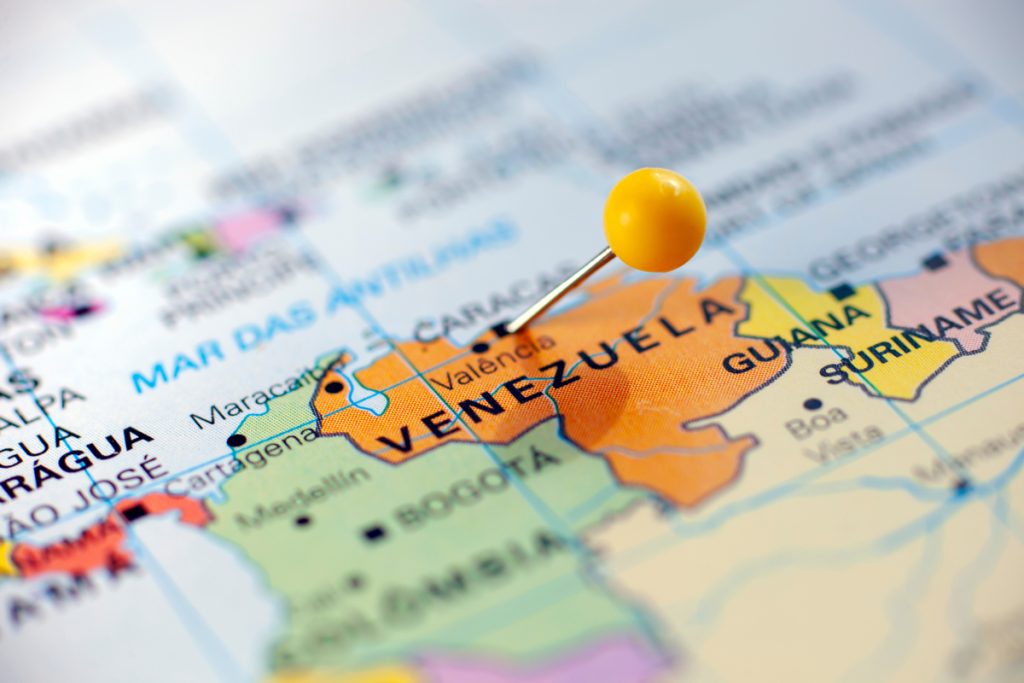
Is the Trump administration’s military escalation toward Venezuela driven less by counternarcotics concerns and more by competition over strategic minerals?
After former Fox News host and current Defense Secretary Pete Hegseth suggested destroying a small Venezuelan boat, U.S. forces allegedly destroyed several vessels near Venezuelan waters, while officials framed the actions as part of an anti-drug mission. Yet federal data shows Venezuela is not a major source of narcotics to the U.S., and no drug seizures were presented as evidence, even as the U.S. deployed an aircraft carrier, aircraft, troops, and restricted airspace.
In this article, the author contends this fits a long U.S. pattern of interventions in resource-rich countries under noble pretexts. He cites Iran, Chile, Guatemala, Iraq, Libya, Congo, and Indonesia. With an estimated $1.36 trillion in mineral wealth – bauxite, coltan, gold, and rare earths critical to modern technology – Venezuela is positioned as a major prize in a global “resource race.”
Meanwhile, illegal mining in Venezuela’s south has devastated the environment and fueled armed groups, child and forced labor, and abuse of Indigenous communities. While President Nicolás Maduro is authoritarian and widely seen as illegitimate, the author argues his abuses do not justify large-scale military deployments.
The piece calls for transparency: if U.S. aims are democracy, drugs, or minerals, the administration should state so clearly and pursue appropriate tools… diplomacy, evidence-based counternarcotics policy, or negotiated mineral agreements, before the U.S. slides into a conflict the public did not fully understand or choose.


