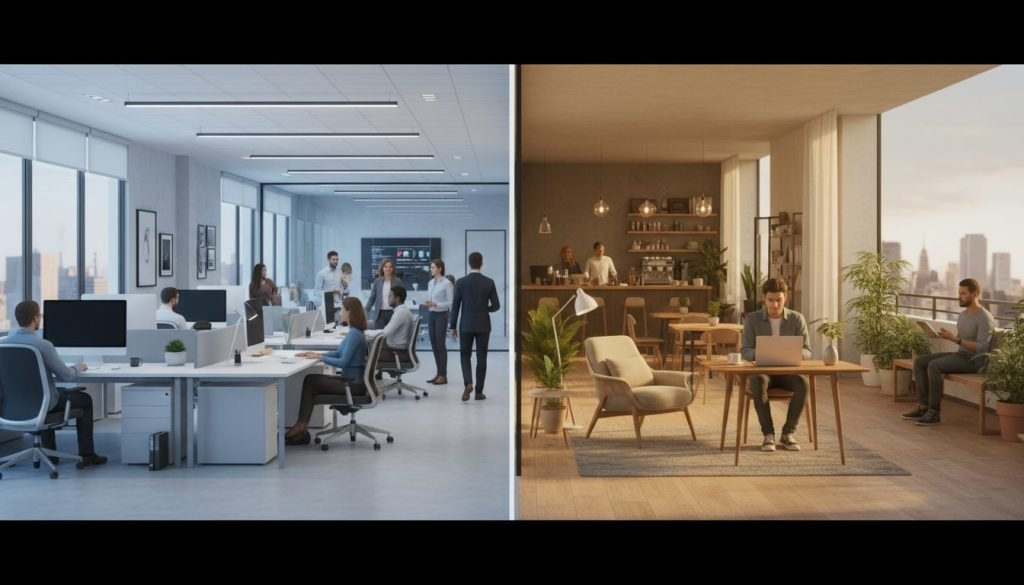
Remote work heading into 2026 feels less like a settled compromise and more like a tug-of-war. Some employers are tightening return-to-office rules, and a meaningful slice say they won’t allow remote work at all by 2026, even though plenty of teams are still operating in hybrid mode. On the employee side, flexibility has become a dealbreaker.
A large majority say they’de start job hunting if remote options disappeared, which turns policy changes into a retention risk. It is not just a management decision. Hybrid work also look like the most common day-to-day setup for people in remote-capable roles, so the “default” isn’t fully remote or fully in-office. It is a mix that keeps shifting according to what the job demands.
At the same time, the tools are changing fast. Teams are leaning more on AI to speed up writing, analysis, and routine tasks. IT groups are moving toward more automated endpoint management to keep far-flung laptops and phones patched, secure, and usable.
The bigger story isn’t just where people sit. It’s how companies measure output, protect culture, and keep distributed work running smoothly when expectations and leverage don’t line up anymore.
Post Contents
Key Takeaways
- Remote work in 2026 is being shaped by a real push and pull. Many companies are tightening return-to-office rules, while a lot of workers treat flexibility as a baseline requirement, not a bonus.
- Hybrid has become the middle ground most employers can live with. Plenty of teams are settling into a mix of office and remote days, and the exact setup often changes based on the role, the manager, and how the work flows.
- Scarce skills are still getting special treatment. Roles in software, AI strategy, and data tend to land the highest pay, and six-figure remote offers are common when the work is specialized and impact is easy to measure.
- Distributed work runs better when companies stop obsessing over “time at a desk” and get serious about results, security, and tooling. That includes clear performance goals, strong cybersecurity basics, and more automation to support devices and collaboration across locations.

The Great Office Divide: Companies Split on Remote Work’s Future
Remote work in 2026 starts with a split at the leadership level. Some executives are doubling down on return-to-office rules because they believe culture, collaboration, and faster decision-making happen best in person. Others are sticking with hybrid or remote-first setups, pointing to a few years of steady output and the ability to hire beyond one city. The result is messy. “Normal work” now depends a lot on who you work for, not just what you do.
Return-to-Office Mandates Reshape Corporate Culture
Across several surveys, around 30% of companies say they plan to scale back or fully drop remote work by 2026, which signals a real pull toward traditional office routines. Leaders often frame it as a culture and performance move, arguing that mentoring, relationship-building, and quick problem-solving are harder to recreate on video calls.
Employees aren’t shrugging it off, though. One commonly shared survey found 76% would consider quitting if remote options disappeared, and another found 85% of job seekers see flexible work as a key factor.
That push and pull is already costing some organizations money and momentum through avoidable churn, along with the constant cycle of replacing people who won’t accept a five-day office requirement.
Hybrid Work Emerges as the Compromise Solution
The loudest headlines focus on extremes, but most companies are landing in the middle. Hybrid is becoming the default, with employers trying out three- or four-day office requirements, set “anchor days,” or team-led schedules that match how people actually work.
Recent polling suggests more firms are leaning toward four in-office days in 2026, while others hold the line at two or three to avoid losing talent. Day to day, that puts many workers in a “both” setup, where expectations change by role, seniority, department, and even location.
The hard part for leadership is making hybrid feel real instead of vague, with clear communication, fair ways to measure performance, and meeting habits that don’t turn at-home staff into second-class participants.
What Employees Are Really Saying About Flexibility
Under all the policy debates, employees tend to say the same thing: they want flexibility that actually works, not a cosmetic perk. People value skipping long commutes, protecting focus time, and handling family or caregiving responsibilities without feeling like their careers stall.
For a lot of workers, remote or hybrid options have moved into the “baseline expectation” category, which is one reason fully on-site roles are harder to fill in fields like software engineering, data science, and UX.
At the same time, many workers are open to hybrid when it’s predictable and collaborative, as long as the company doesn’t quietly punish people who use the flexibility on offer. The employers who treat this as a practical business decision, not a control issue, usually end up with a stronger hiring story and lower turnover.
High-Demand Remote Roles Commanding Premium Salaries
Remote work trends in 2026 aren’t only changing where people work. They’re also changing who gets paid the most to work that way. The highest demand still sits in tech, data, and strategy, and six-figure offers are common for people who can run with complex work and collaborate across time zones without constant hand-holding.
Specialized Software Engineers Lead the Pack
Specialized software engineers remain top earners in remote roles. Employers are moving away from “full stack everything” and hiring for depth in areas like backend performance, cybersecurity, AI integration, and cloud infrastructure.
For experienced candidates, salaries in the $100,000 to $150,000 range are common, and higher isn’t unusual in competitive markets. These engineers keep the systems running that make distributed work possible, like secure platforms, scalable applications, and reliable cloud services teams can access anywhere.
Since this work is mission-critical and still hard to automate end-to-end, companies often offer remote-first setups, flexible hours, and strong benefits to keep talent from walking.
AI Product and Prompt Strategists Fill a New Niche
One of the newer high-pay remote lanes is work built around AI, especially AI product strategists and prompt-focused roles. The job isn’t simply “writing prompts.” It’s translating real business needs into AI workflows that hold up in production, then testing, refining, and putting guardrails in place so the output stays useful and safe.
These roles sit between product, user experience, and machine intelligence, which makes them valuable when a company wants AI results without reputational or compliance headaches. Early job listings and compensation chatter suggest experienced AI strategists, particularly in SaaS, healthcare, and finance, are getting pulled into the six-figure range fast because demand is outrunning supply.
Data Analysts and Decision Specialists Turn Insight into Revenue
Data roles are also doing well in a remote-first world, especially for people who can go beyond dashboards and help teams make decisions. Titles like data analyst, analytics engineer, and “decision specialist” keep showing up across industries, with many roles advertised around $80,000 to $130,000 depending on domain knowledge and seniority.
The work includes cleaning and visualizing data, but the real value is connecting patterns to actions, like improving forecast accuracy, reducing fraud, or tightening operations. As AI tools take over some routine analysis, companies pay more for humans who can challenge assumptions, sanity-check results, and explain what matters in plain language to non-technical teams.
Human-Centered UX Designers Protect the User Experience
As more work becomes digital and automated, human-centered UX and product designers have become more important, not less. The best designers aren’t just making screens look nice.
They’re running research, mapping user journeys, and spotting where products confuse or exclude real people, including older users, people with disabilities, and anyone who isn’t “power user” technical. That work is critical in AI interfaces, telehealth tools, fintech apps, and education platforms, where a clunky experience can break trust quickly.
Experienced remote UX designers often land in the $90,000 to $130,000 range, especially when they bring strong research skills, fast prototyping, and the ability to work closely with engineers and PMs across distributed teams.
Industries Leading the Remote Work Charge
Remote work trends in 2026 show up almost everywhere, but a fiew industries have gone further than the rest. They aren’t just allowing remote work. They’ve built workflows, hiring, and even their business models around distributed teams.
Technology and SaaS Companies Set the Standard
Tech is still the clearest example of remote work done at scale. Many well-known companies were remote-first long before it was popular, including GitLab, Zapier, and Automattic. Their playbook is pretty consistent: strong documentation, asynchronous communication, and performance measured by output instead of face time.
What’s important is that these companies didn’t stay small. They proved distributed teams can ship products quickly, keep quality high, and still build a real culture without a shared office. That success has pushed other tech employers, including larger names like GitHub and Microsoft, to keep or expand flexible work policies.
SaaS businesses, in particular, use remote hiring as a talent advantage. They can recruit specialized people in engineering, product, and customer success without being boxed into one city’s labor market. When companies pair that with solid collaboration tools and security practices, remote work becomes less of a compromise and more of a hiring edge.
Healthcare and Telemedicine Expand Remote Opportunities
Healthcare has quietly become one of the biggest remote-work growers, mostly because telemedicine is now normal for many patients. Virtual care platforms make it possible for doctors, therapists, nutritionists, and mental health counselors to handle appointments through secure video calls.
Remote work in healthcare isn’t only clinical, either. Medical coding, claims processing, health informatics, care coordination, and patient advocacy have shifted toward home-based roles. Companies like Teladoc Health, Amwell, and BetterHelp have leaned hard into virtual care and employ large remote workforces as a result.
Pharma companies, insurers, and medical device firms are also hiring remote staff for regulatory work, clinical trial support, and analytics. The upside is real on both sides: patients in underserved areas get better access, and healthcare professionals get flexibility that used to be rare outside admin roles.
Marketing and Creative Roles Thrive in Distributed Teams
Marketing and creative work fits remote teams naturally because results are easy to track. If a campaign performs, nobody needs to ask how many hours someone sat at a desk. That’s why remote work has taken off across digital marketing, content, social media, SEO, design, and creative strategy.
Teams collaborate through tools like Slack, Asana, and Figma, and it’s now common for an agency or in-house team to be spread across multiple time zones. Companies like Buffer, HubSpot, and Shopify have shown that remote marketing teams can still run complex multi-channel work without losing speed.
The freelance side is growing too. Platforms like Upwork and Fiverr make it easier for independent marketers and designers to work with global clients, which keeps pushing the industry toward location-independent talent. When performance is measured by engagement, conversions, and revenue, remote work isn’t a stretch. It’s a logical setup.
Conclusion
Remote work trends in 2026 make one thing clear: flexibility isn’t a nice bonus anymore. It’s one of the main reasons people choose a job, stay in it, or walk away. Industries that moved early, like SaaS, telehealth, and digital marketing, are showing that distributed teams can still grow fast and stay steady when the market gets rough. The best offers are going to people with real depth, the specialists and strategists who can turn tech, data, and design into outcomes, not just busywork. The next phase won’t be won by companies treating remote work as a temporary arrangement. It’ll be won by the ones who build it into how the business actually runs.
FAQ: Remote Work 2026 Trends
- What are the biggest remote work 2026 trends employers should watch?
- The biggest shifts are the split between office-first companies and hybrid employers, heavier use of AI in day-to-day work, and a workforce that expects flexibility as standard. The companies doing best aren’t just announcing policies. They’re backing them with secure systems, clear expectations, and performance reviews that focus on results instead of presence. When hybrid rules are specific and fair, hiring gets easier and turnover slows down.
- Which jobs benefit most from remote work 2026 trends?
- Jobs with digital workflows and clear deliverables tend to benefit most. Software engineering, data and analytics roles, AI strategy, UX design, and digital marketing all fit well because work can be tracked by outputs and shared easily across time zones. These roles also show up across multiple industries, especially tech, SaaS, and healthcare, which keeps demand and compensation strong. Remote options are likely to stay common in these fields.
- How are employees responding to stricter return-to-office policies?
- A lot of employees see strict return-to-office mandates as a step backward, especially after several years of proving they can deliver remotely. Many are willing to change employers rather than lose flexibility, which is why some companies are softening rigid rules and moving toward hybrid schedules instead. Even workers who don’t mind coming in sometimes still react badly to surprise policy changes or inconsistent enforcement. Trust matters more than leaders expect.
- What skills matter most for remote careers in 2026?
- Strong technical skills still matter, but the edge often comes from how you work. Clear communication, good writing, time management, and comfort with collaboration tools make remote employees easier to rely on. Employers also value people who can work without constant direction, spot problems early, and explain their reasoning in plain language. Since hiring is increasingly global, being able to work well across cultures and time zones is becoming a real advantage.
- How can companies stay competitive in hiring remote talent?
- Start with real flexibility and policies people can understand in one read. Be upfront about expectations, meeting cadence, time zone coverage, and how performance is measured. Companies that invest in secure access, solid cybersecurity, and good onboarding make remote work feel stable instead of improvised. Support also matters, like training, career growth, and mental health resources, because remote workers can burn out fast when everything feels “always on.”