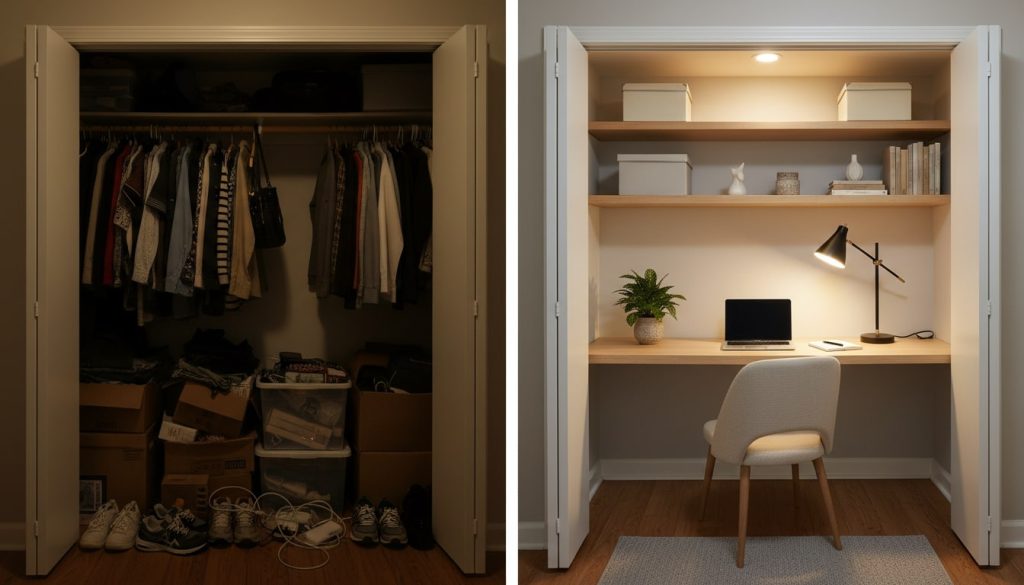
A work from home office does not require a dedicated room or even a large part of any space. You can do your UX design, customer support, and back end development inside your closet.
With a simple layout, decent lighting, and a few storage upgrades, even a tiny closet can feel comfortable and surprisingly efficient. This piece breaks down the process, from measuring and planning to setting it up and making it look like it belongs in your home.
Post Contents
Key Takeaways
- A closet office, or “cloffice,” gives you a real, dedicated work spot without needing a spare room or taking over your bedroom or living room.
- It works best when you check the basics early, like the closet’s size, where you’ll plug things in, and how you’ll keep the space from getting stuffy during a full workday.
- The layout matters more than fancy upgrades. If you plan for legroom and pick a desk style that fits the space, it won’t feel cramped or awkward to use.
- Lighting is non-negotiable. Mixing a decent overhead light with focused task lighting cuts shadows, reduces eye strain, and makes the space feel like a workspace instead of a dark storage corner.
What Is a Closet Office (Cloffice) and Why It Works for Remote Workers
A closet office, often nicknamed a “cloffice,” is basically a home office tucked inside a regular closet. Instead of letting that space sit empty or turn into a catch-all, you set it up with a desk surface, a chair, proper lighting, and the few supplies you actually use day to day. It’s a practical option if you work remotely but don’t have a spare room, since it gives you a real workspace without taking over your bedroom or living room.
Privacy is a big part of the appeal. Close the doors or pull a curtain and the clutter and movement around you fade into the background. That small separation also does something mental, not just physical. It helps you switch into work mode, and it makes it easier to “leave” work at the end of the day, even if your couch is only a few steps away.
Assessing Your Closet: Is It Suitable for a Closet Office?
To make sure you can fit an office in your closet, you need to fully assess the space. This ensure you are not cramped while completing your eight work hours.
Measuring Dimensions: Width, Depth, Height, and Door Clearance
Grab a tape measure and check the inside width, depth, and height of the closet. You’ll want enough depth for a usable desk surface, and enough width so your laptop or monitor doesn’t feel crammed into a corner.
As a rough baseline, about 24 inches of depth works for many setups, but more is always nicer if you can get it. Also measure how the doors open. Bi-fold and sliding doors can be fine, but only if they don’t block your chair, bang into your knees, or make it awkward to sit down and stand up.
Checking Power Outlets, Ventilation, and Internet Access
Power is the next big one. You’ll likely be running a laptop, maybe a monitor, a phone charger, and a lamp, so you need a safe, easy way to plug things in. Check if there’s an outlet inside the closet, or close enough that you can use a power strip without creating a tripping hazard.
Ventilation matters too, because closets can get warm fast once electronics are running. If the space feels stuffy, plan for airflow. Sometimes cracking the doors is enough, and sometimes a small fan makes a big difference. Last, don’t assume Wi-Fi will behave. Stand inside the closet and test the signal, since video calls will quickly expose weak spots.
Identifying Potential Issues: Noise, Lighting, and Clutter
Take a minute to notice what’s happening around that closet during a normal day. If it sits next to a hallway, laundry area, or the noisiest room in the house, you might need a plan for sound. That can be as simple as good headphones, or a little weatherstripping around the doors. Lighting is another common problem.
Most closets are dim and have zero natural light, so expect to add a solid desk lamp or a brighter fixture. Then there’s clutter. If the closet is packed with boxes, seasonal stuff, and random “I’ll deal with this later” piles, it’s going to feel stressful to work in until you clear it out and decide what still belongs there.
Deciding Between a Reach-In vs. Walk-In Closet Office
Reach-in closets are usually tighter, but they can still work well as a closet office if you keep the setup simple and use smart storage. Some people remove the doors or swap them for a curtain to make the space feel less cramped.
Walk-in closets give you more breathing room, so you can fit a wider desk, add shelves, and still have space for a few storage items if you need them. The main question is how much of that closet you’re willing to commit to work, and how much you still need for regular storage.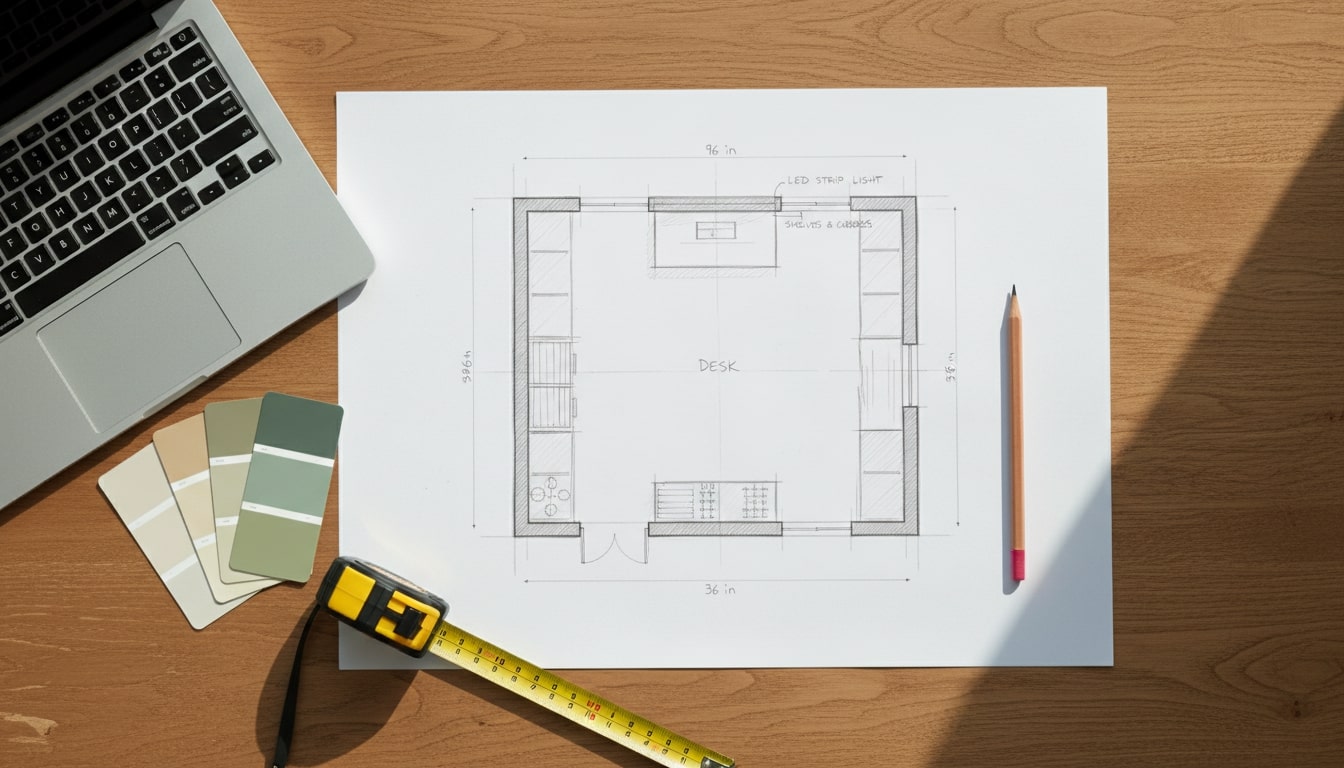
Planning Your Closet Office Layout
A good closet office layout isn’t about cramming a desk into a tight space. It’s about making the spot feel easy to use every single day, with enough room to sit comfortably, move your legs, and keep your essentials within reach. A little planning here saves you from rebuilding the setup later.
Choose Your Desk Style First
Your desk is the “anchor” of the whole cloffice, so pick the style based on the closet’s depth and how permanent you want the setup to be.
- Floating desk (wall-mounted): Great for small reach-in closets. It looks clean, frees up floor space, and you can set it at a comfortable height.
- Built-in desk surface: Best if you want a seamless look and don’t plan to move things around. It’s sturdy and can run wall-to-wall.
- Slim desk or console table: Works if you want something removable or you’re renting and can’t mount heavy supports.
- Fold-down desk: Handy if you still need the closet for storage sometimes, or you want the option to “close up shop” fast.
Aim for a surface deep enough to rest your forearms comfortably while typing, not just a shelf that barely holds a laptop.
Map Out Legroom and Chair Space
Closet offices fail when you can’t sit like a normal human. Before you commit to any desk size, check these basics:
- You should be able to slide your chair in and out without fighting the door frame.
- Your knees shouldn’t hit the back wall when you lean in to type.
- If the closet is shallow, plan for a stool or a chair with a smaller footprint instead of a bulky office chair.
- If you’re tall, prioritize legroom over extra shelves. Storage is nice, but comfort wins.
A quick test that helps: set a chair in front of the closet, pretend you’re working for five minutes, and notice what feels annoying right away.
Decide Where Storage Will Live
Storage keeps the workspace calm, but it has to be placed where it doesn’t steal your movement space.
Good options include:
- Shelving above the desk for books, bins, and supplies you don’t need every minute
- Side shelves if the closet is wide enough and your shoulders won’t feel boxed in
- A narrow drawer unit under one side of the desk (only if it doesn’t kill your legroom)
- Wall organizers like pegboards, hooks, or small rails for headphones, cords, and notes
Try to keep the desk surface mostly clear. The more you pile on it, the more the closet starts feeling like a storage nook again.
Lighting Your Closet Office for Comfort and Productivity
Lighting can really make or break a closet office. Most closets don’t get natural light, so if you don’t plan the lighting on purpose, the space can feel gloomy fast. The goal is simple: make it bright enough to work comfortably, without turning it into a spotlight that feels harsh.
Why Good Lighting Matters in a Closet Office
In a small, enclosed setup, bad lighting shows up right away. You end up squinting, leaning toward the screen, and feeling tired sooner than you should. Good lighting reduces eye strain and headaches, helps you stay more alert during long stretches, and makes you look clearer on video calls. It also changes the vibe of the space. A well-lit closet feels like a tiny office, not a storage hole you’re trying to survive in.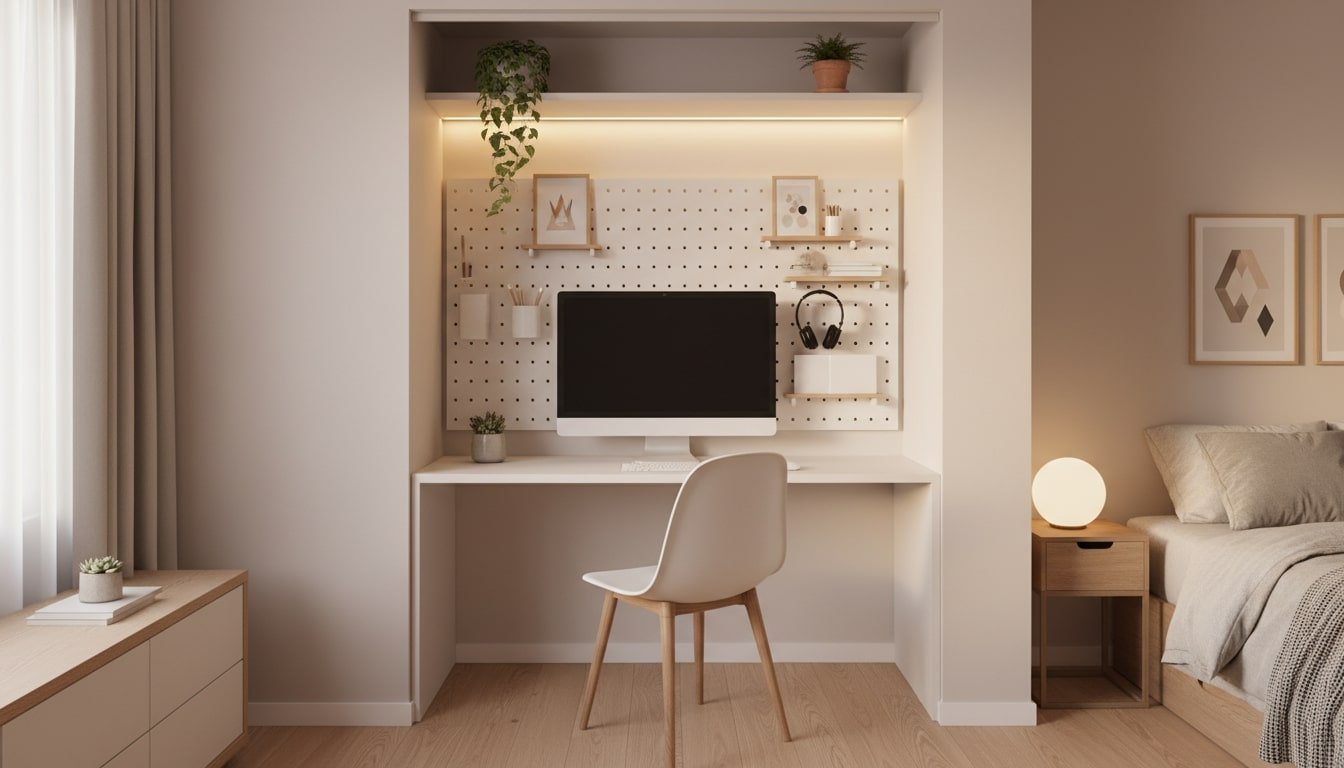
Combining Overhead and Task Lighting
Overhead light is a good start, but it usually isn’t enough on its own. It can cast shadows across your desk, especially if you’re sitting between the light and your work surface. Add task lighting that’s aimed directly where you work, like a desk lamp, clamp light, or an LED strip under a shelf. That extra layer is what makes the space feel usable.
If there’s no ceiling fixture at all, you still have options like stick-on LED strips, battery puck lights, or even a simple plug-in pendant light to give you general lighting, then add task lighting on top of that.
Choosing the Right Bulb Color and Brightness
Bulb color matters more than most people expect. Neutral to cool white light tends to feel more “daytime” and keeps you awake, so it’s a better fit for working. A warmer yellow bulb can be cozy, but in a closet office it can also feel dim and make you sluggish, especially in the afternoon. Brightness matters too.
Too dim feels tiring, too bright feels like you’re sitting under a microscope. If you can, go with dimmable bulbs or an adjustable lamp so you can tweak it depending on the time of day and what you’re doing.
Conclusion
A closet office can be a solid fix if you work from home but don’t have a spare room to claim as an office. The big win is having a dedicated spot that’s just for work, even if it’s small. When you plan the layout, lighting, storage, and comfort basics upfront, the space stops feeling like a closet and starts feeling like a real work zone.
Start simple. Measure the space, clear out what you don’t need, add a desk surface and lighting you can actually work under, then adjust as you learn what your routine needs. With a bit of thought and some small upgrades, a closet office can give you the focus and organization that’s hard to get when you’re working off the couch or kitchen table.
FAQ: Closet Offices
- Can I use a closet office if I have video calls all day?
- Yes, and a lot of people do. The trick is making the background look intentional and getting the lighting right. Something simple behind your chair like peel-and-stick wallpaper, a fabric panel, or a small shelf with a few books or plants already goes a long way. Put a lamp or ring light near face level so you don’t look shadowy, and make sure your camera is stable and at a decent angle. If noise is an issue, noise-cancelling headphones help, and a basic directional mic can cut down on background sound.
- How do I keep my closet office cool during the summer?
- Closets warm up quickly, especially once your laptop and monitor are running. If you can, leave the door open between calls or during focused work blocks. A small clip-on fan or USB desk fan makes a bigger difference than you’d expect, as long as it’s aimed toward you and not just spinning air in the corner. Don’t block vents if your closet has them, and try elevating your laptop on a stand so it can breathe. If airflow is really limited, a small air purifier with a fan setting can help the space feel less stuffy.
- What’s the minimum closet size needed for a functional closet office?
- You can make it work in a closet around 24 inches deep and 36 inches wide, but it will feel tight. Something closer to 30 inches deep and 48 inches wide is noticeably more comfortable, especially if you’re working long hours. The real test is whether you can sit without your knees hitting the back wall, move your arms without feeling boxed in, and pull your chair in and out without a struggle. If the closet is narrow, a wall-mounted fold-down desk or a shallow floating surface can be the difference between “usable” and “annoying.”
- Do I need to remove the closet doors to make a closet office work?
- Not at all. Keeping the doors can actually be a plus, because you can open them during the day and close them when work is done, which helps your brain switch off. Sliding doors and bi-fold doors are usually easier because they don’t swing out and get in the way. If the doors feel cramped, block light, or limit your chair movement, you can remove them temporarily or replace them with a curtain for a softer look and easier access.
- How can I make my closet office feel less claustrophobic?
- Light colors help a lot, even if it’s just removable wallpaper or a fresh coat of paint. Good lighting does the rest. A brighter overhead option plus a desk lamp makes the space feel more open and less cave-like. Keeping the desk surface clear matters too, since clutter feels ten times bigger in a small space.