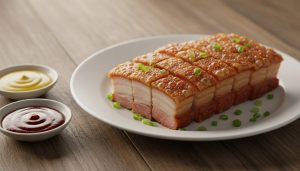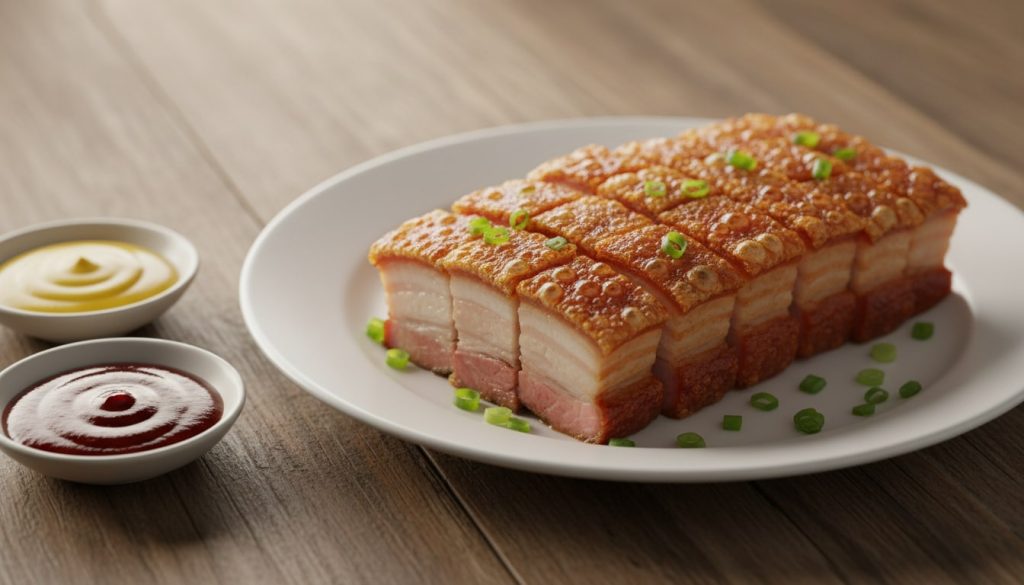
Siu yuk, or Cantonese crispy roast pork belly, is a beloved Cantonese classic known for its glassy, crackling skin and succulent, flavorful meat. You’ll spot siu yuk hanging in Hong Kong–style barbecue shops, where butchers chop it to order into bite-sized pieces with a satisfying crunch.
While it looks intimidating, you can recreate authentic siu yuk at home with the right cut of pork, a simple marinade, and careful attention to drying and roasting. This recipe article walks you through every step so you can serve impressive Cantonese roast pork belly in your own kitchen.
Contents
Key Takeaways
- Achieving ultra-crispy siu yuk skin hinges on meticulous drying, thorough pricking, and a two-stage roasting process.
- The contrast between the glassy, shatter-crisp crackling and the juicy, flavorful meat is the hallmark of authentic siu yuk.
- Troubleshooting common issues like chewy or unevenly blistered skin often involves re-evaluating moisture levels and oven heat during the final crisping stage.
Siu Yuk Recipe
Siu yuk is all about the contrast between that crispy skin and tender meat. You want that loud, shatter-crisp crackling on top, then juicy pork underneath that tastes like five-spice, garlic, and Shaoxing wine. The good news is you don’t need fancy gear or weird ingredients. You just need dry skin, lots of tiny holes, and a hot finish. If you are missing any essentials, find them at Amazon Grocery.
Ingredients for Siu Yuk
For the pork
- 2 lbs (900g) skin-on pork belly (pick a piece with fairly even fat and a smooth, uncut skin)
- 1 tbsp white vinegar or rice vinegar (for the skin)
- 2 tsp coarse sea salt (for the skin)
For the meat marinade
- 1½ tsp five-spice powder
- 1 tsp white pepper
- 1 tsp sugar
- 1 tsp salt
- 2 tbsp Shaoxing wine (dry sherry works if that’s what you have)
- 3 cloves garlic, minced
- 1 tsp fresh ginger, grated
Optional aromatics
- 2 scallions, cut into sections
- 1 star anise
- Small piece fermented bean curd (adds deeper savory flavor, but skip it if you don’t have it)
Kitchenware You’ll Need
- Wire rack + rimmed baking sheet (so heat hits the pork evenly and drippings don’t smoke up your oven)
- Fork, skewer, or meat poker (for pricking the skin)
- Paper towels (you’ll use more than you think)
- Small bowl (for the marinade)
- Aluminum foil (to protect the sides while it cooks through)
- Sharp knife or cleaver (for clean cuts through the crackling)
- Thermometer (optional, but helpful)
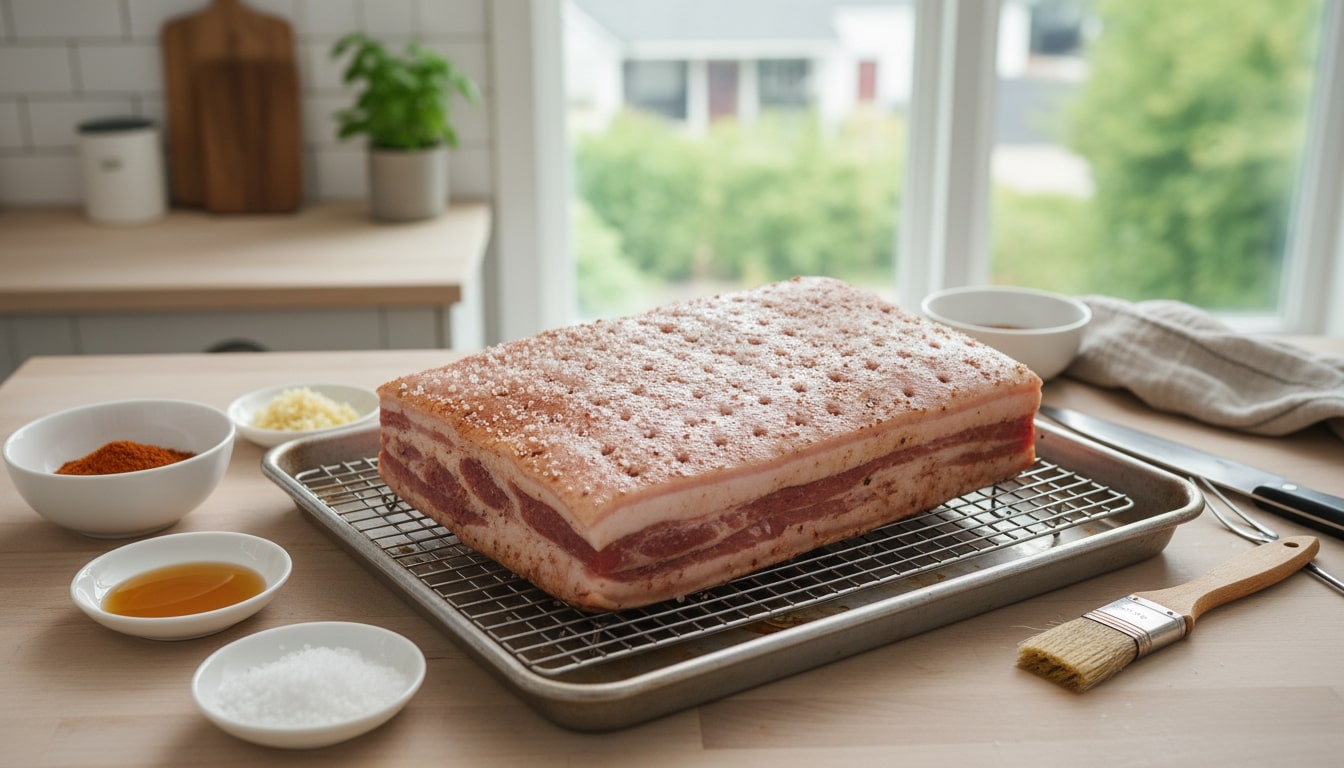
Step-by-step: How to Make Siu Yuk
- Prep the pork belly
- Rinse the pork belly under cold water, then dry it really well. Set it skin-side down on a cutting board and pat the meat side dry too. Any lingering moisture works against you later when trying to achieve that crispy skin, which is the key to a good Siu Yuk.
- Prick the skin like you mean it
- Flip the pork belly skin-side up. Prick the skin all over with a fork, skewer, or meat poker. You’re aiming for a ton of small holes across the whole surface. Go through the skin, but try not to stab deep into the meat. Those holes are what let fat render and create bubbly crackling skin instead of a tough, leathery top.
- Season the meat side (not the skin)
- Turn it back over, skin-side down. Mix five-spice, white pepper, sugar, salt, Shaoxing wine, garlic, and ginger in a small bowl. Rub it into the meat side and along the edges. Keep it off the skin as much as possible. If you’re using scallions or star anise, tuck them against the meat side.
- Dry the skin properly
- Flip it skin-side up again and pat the skin dry one more time. Rub vinegar over the skin to help pull out moisture. Place the pork on a wire rack over a tray and refrigerate it uncovered for at least 6 hours, ideally overnight. You want all the moisture removed from the skin. When you’re ready to roast, the skin should feel dry and slightly tacky, not wet.
- Salt the skin right before roasting
- Take the pork out about 30 minutes before cooking so it’s not fridge-cold. Pat the skin dry again, then rub the coarse sea salt evenly over the top in a thin layer. This is your last moisture pull, and it seasons the crackling too.
- Roast low enough to cook the meat through
- Preheat the oven to 375°F (190°C). Put the pork belly on the rack over a foil-lined baking sheet. Wrap foil around the sides of the pork belly, leaving only the top skin exposed. Roast for 60–75 minutes, until the meat is tender and cooked through (145°F/63°C if you’re checking with a thermometer).
- Blast the skin to puff and crackle
- Pull the tray out and remove the foil. Brush off any loose salt sitting on top. Turn the oven up to its highest setting (usually 475–500°F / 245–260°C) or switch to broil. Return the pork to the upper third of the oven and roast for 15–30 minutes until the skin bubbles and turns deep golden. Rotate the tray if one side is browning faster. If you’re broiling, don’t walk away. It can go from perfect to burnt fast.
- Rest, then slice cleanly
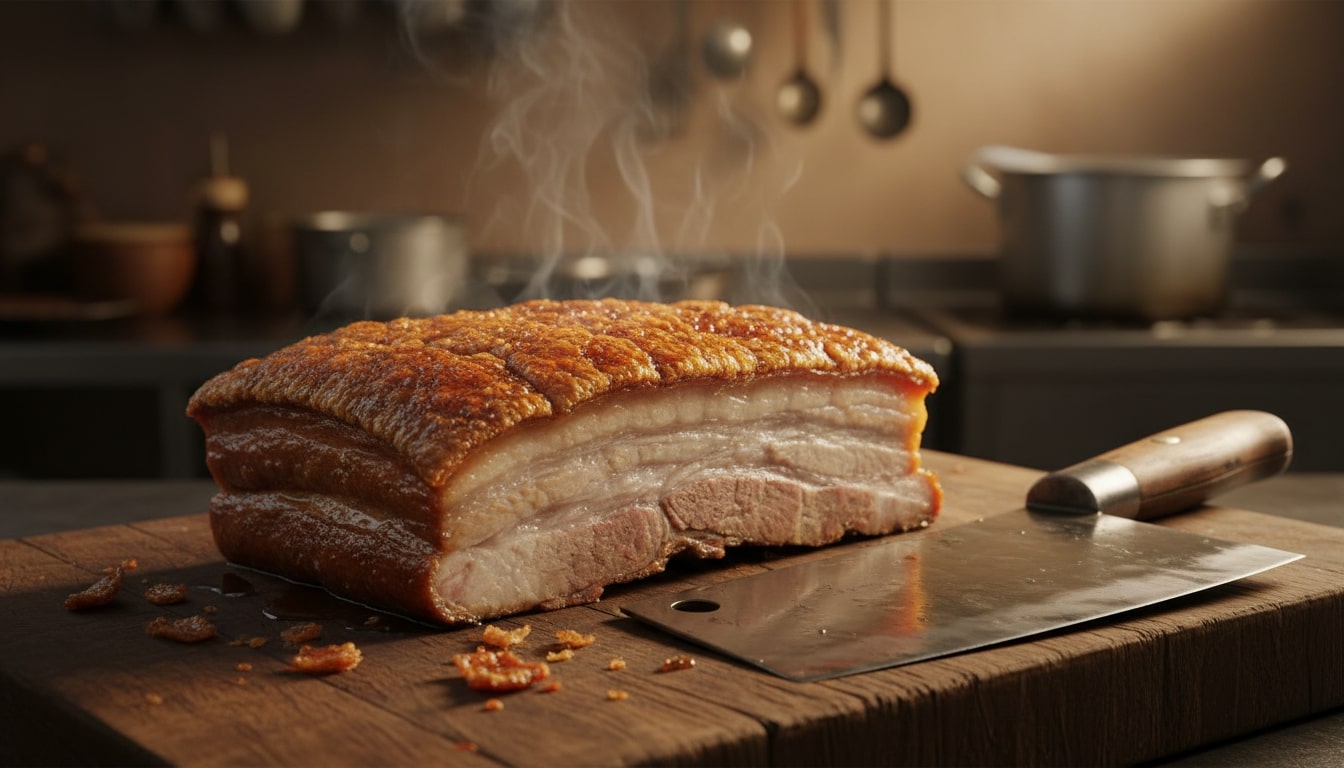
- Let the pork rest on the rack for about 10 minutes so the juices settle. Slice it skin-side up using a sharp knife or cleaver. Cut with one firm motion so you crack through the crackling instead of crushing it.
- Serve while it’s still crisp
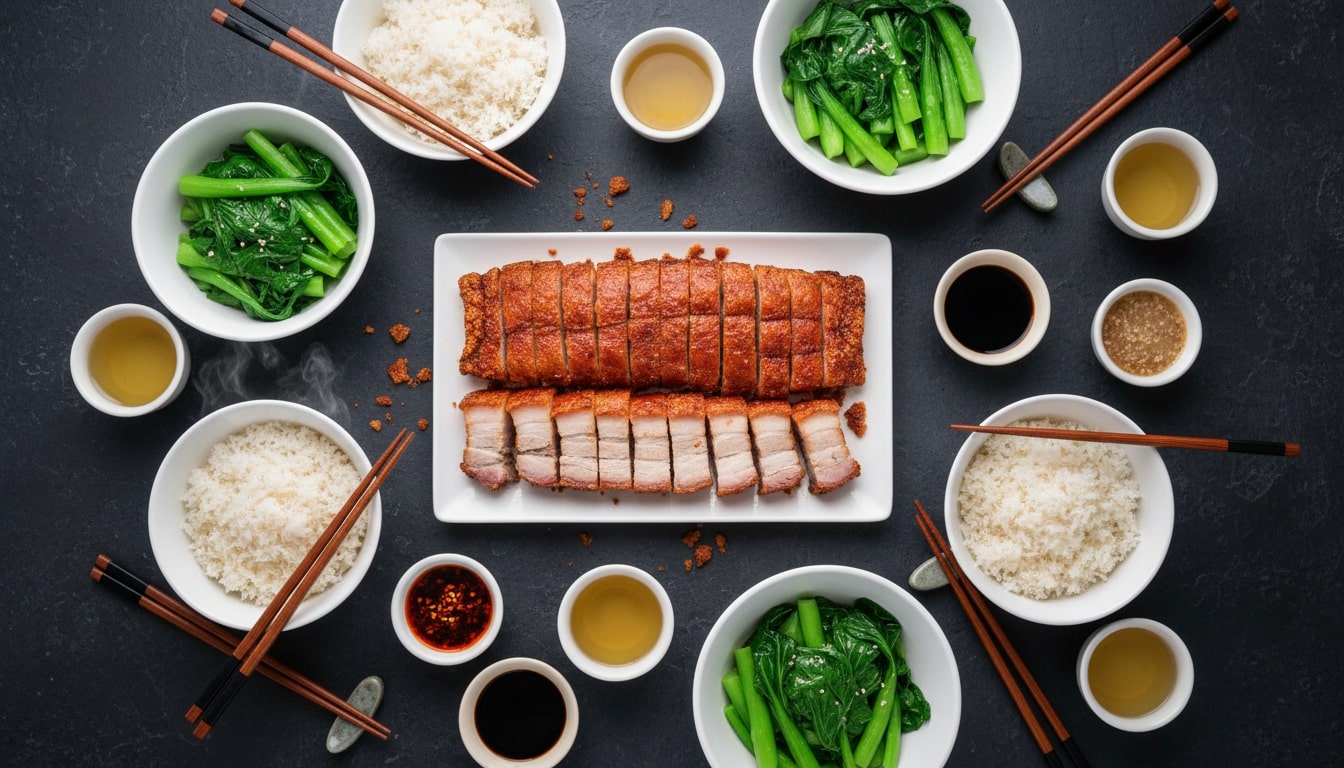
- Plate the pieces with the crackling facing up. Siu yuk is best served right away, while the skin is still loud and crunchy. Serve with steamed rice and something simple like blanched greens. For dipping, Chinese hot mustard, hoisin, or chili oil all work.
How to Get Ultra-Crispy Siu Yuk Skin and Fix Soggy Crackling
Crispy skin is the whole point of siu yuk. When it’s right, the top shatters and the pork stays juicy underneath. When it’s wrong, you get chewy skin that feels like it’s fighting back. Almost every crackling problem comes down to three things: moisture, rendered fat, and hitting it with high heat at the end.
What’s actually happening when the skin turns crisp
- Dry skin crisps, wet skin steams. If there’s water sitting on the surface, the oven spends its energy turning that into steam, and steam keeps the skin soft.
- Rendered fat creates bubbles. As the fat under the skin melts, it lifts and separates the layers. That’s what gives you that bubbly, airy crackling instead of a dense hard sheet.
- High heat finishes the job. The final blast is what makes the skin puff and set into a crunchy shell. Without it, it can stay pale and leathery even if the pork is cooked.
Techniques that make crackling more reliable
Air-dry the skin like it’s part of the recipe
Refrigerate the pork belly uncovered, skin-side up, for 6–24 hours. Pat it dry with paper towels before it goes in, and again right before roasting. The skin should feel dry and a bit tacky, not damp. A small fan aimed into the fridge can help, but time does most of the work.
Prick the skin everywhere, not just “most places”
Use a skewer, fork, or meat poker and make a lot of tiny holes across the entire skin. You want to go through the skin, but try not to stab deep into the meat. Missed areas often stay flat and chewy because fat can’t escape and the skin can’t blister evenly.
Vinegar + salt, but don’t let it turn into a wet paste
Rub a thin layer of vinegar over the skin to pull out moisture and help the surface blister. Before roasting, pat dry again, then apply an even layer of coarse salt. If you see a salty, wet sheen forming, that’s moisture coming back up, so blot it before it goes into the oven.
Roast on a rack
Always elevate the pork belly on a wire rack over a tray. It keeps the bottom from steaming in its own fat and lets hot air circulate, which helps the skin dry and the fat render evenly.
Use the two-stage roast every time
Start at a moderate heat (around 375°F / 190°C) to cook the meat and slowly render fat. Finish with a high-heat blast or broiler to puff and crisp the skin. Stay close for this part and rotate the tray if your oven browns unevenly.
Common problems and quick fixes
Skin is chewy or rubbery
- Why it happens: The skin wasn’t dry enough, or the final heat wasn’t hot enough.
- Fix: Put it back in at 450–475°F (230–245°C) or under the broiler for 5–10 minutes. Watch it closely.
- Next time: Dry overnight and make sure the skin feels truly dry before roasting.
Some spots are bubbly, others are flat
- Why it happens: Uneven pricking or oven hot spots.
- Fix: Move the pork closer to the heat and rotate the tray more often so the flat areas get a chance to blister.
- Next time: Prick more evenly, especially around thicker sections of skin.
The skin burned before it fully crisped
- Why it happens: Too close to the broiler, or the heat was too aggressive too soon.
- Fix: Drop the rack down one level and, if you can, use a lower broil setting. Cover the darkest patches with small bits of foil while the rest finishes.
The skin stays pale even after high heat
- Why it happens: Too much moisture sitting on the surface, or a layer of salt is still sitting wet on top. Sometimes it just needs more time.
- Fix: Scrape off excess salt, pat dry, then keep roasting in short bursts (3–5 minutes) until it blisters. Keep your eyes on it the whole time.
Conclusion
The key to the Siu Yuk’s iconic skin is thorough drying. This calls for 6 hours or overnight drying just to remove every moisture from the skin. When all water has been removed, your Chinese New Year dish will have that iconic crispy skin and soft meat. Accompany that flavors with various Asian aromatics to achieve that Hong Kong staple right at your home.
FAQ: Siu Yuk Recipe
- Can I make Siu Yuk with a smaller piece of pork belly for two people?
- You want a 500g pork belly that is enough for two to three people. Be wary of the size since it requires a reduced cooking time of around 40 minutes. Always check the meat’s doneness and remove it from the oven if the Siu Yuk skin is about to burn.
- What’s the best way to season Siu Yuk if I don’t like five-spice powder?
- A good alternative to five-spice powder is white pepper with garlic powder, minced ginger, salt, and sugar. You can further enhance the flavor with some cumin and coriander. While spices does add to the flavor, the defining taste of Siu Yuk is its crispy skin and tender meat.
- How can I adapt Siu Yuk for people who prefer less fatty pork?
- The key here is to find a pork belly with a small fat cap (the white portion between the skin and the meat). If there are no lean pork belly, continue with the recipe. Serve the leanest part of the Siu Yuk to the guest who prefer less fat. You can also remove the skin to trim the fat and serve both the meat and skin separately.
- Is it possible to prepare Siu Yuk in advance for a party?
- The most important prep you can do with the Siu Yuk is to dry it for that crispy skin thoroughly. Though, timing can be tricky since the dish requires hours of roasting. You can complete the roasting and let it sit in room temperature for an hour. If the guests are arriving late, you can oven cook the pork dish for an hour to retain that crispy skin.
- What can I do with leftover Siu Yuk besides reheating and eating it plain?
- Leftover siu yuk is fantastic in fried rice, noodle soups, and stir-fries. Dice the Siu Yuk and add it near the end of cooking to keep some texture. You can also use it in omelets, bao-style sandwiches, or toss crispy reheated siu yuk over salads for a savory, crunchy topping.