Last Updated on 2025-10-13 by Team Ideas24 Contents Create party-worthy canapes with salmon and savory horseradish cream. Step 1Salmon Canapes With Horseradish Cream

Ingredients
Instructions
Whisk together first 4 ingredients.
Step 2
Arrange cucumber rounds in a single layer on a serving tray. Place a piece of salmon on each round.
Step 3
Spoon 1/4 teaspoon sour cream mixture on each salmon slice. Sprinkle chopped chives on top.Nutrition Information
Yield
30
Serving Size
1
Amount Per ServingCalories 45Total Fat 2gSaturated Fat 1gCholesterol 8mgSodium 467mgCarbohydrates 2gProtein 5g
Foundations And Flavor Principles
Few bites deliver sophistication as effortlessly as salmon canapes, balancing richness, acidity, and crunch. Start with quality fish and thoughtful bases, layering texture, temperature, and seasoning to craft memorable mouthfuls.
Choosing The Salmon: Smoked, Cured, Or Poached
The most memorable salmon canapes begin with fish that tastes clean and gentle, cold-smoked for silken depth, gravlax-cured with dill and citrus, or lightly poached for delicate sweetness. Slice evenly into tender ribbons and pat dry so toppings adhere.
Let portions sit in the refrigerator to chill before assembly to awaken aroma and preserve suppleness. For nuance, try tea smoke, beet cures, or juniper accents, keeping salinity restrained so acidity, herbs, and crisp elements can truly harmonize.
Selecting The Base: Blinis, Crackers, Or Cucumber
Your base should support without stealing the show. Yeasted blinis bring gentle puff and warmth. buckwheat adds nuttiness that flatters salmon’s oil. Neutral crackers offer shattering crunch and stability, while buttered rye squares supply nostalgic depth.
For lighter choices, cucumber rounds or compressed apple coins add snap and juiciness. Whatever you choose, keep it sturdy yet delicate, and size for one clean bite so flavors arrive together rather than disintegrating in stages.
Layering Creaminess And Crunch For Contrast
Contrast transforms simple components into a composed bite. Cushion the palate with crème fraîche, whipped labneh, or lemony mascarpone, then add a precise crunch, microtoasts, toasted seeds, or fried capers.
Well-designed salmon canapes rely on that interplay: plush cream, resilient fish, and a crisp note that resets the mouth. Finish with delicate pops, trout roe or pickled mustard seeds, that brighten and extend flavor without pushing salinity beyond balance.
Brightening With Citrus, Herbs, And Spice
Fresh acidity is the heartbeat of balance. A citrus thread, lemon zest, mandarin segments, or yuzu pearls, cuts oil and lifts aromatics. Herbs should read as finishing accents, not salads: dill for classic perfume, chive for grassy snap, tarragon for aniseed lift.
Spice, used sparingly, broadens dimension: Aleppo pepper adds fruitiness, pink peppercorn offers floral warmth, and freshly grated horseradish stirs clarity. Taste sequentially, stopping when brightness feels lively rather than sharp.
Quality, Safety, And Responsible Sourcing
Work with purveyors who document handling, freezing protocols for parasite mitigation, and harvest practices. For raw or lightly cured service, freeze to recommended standards, then thaw gently under refrigeration.
Seek certifications or transparent sourcing that reflects responsible fisheries and cold-chain integrity. Respect shelf life. discard anything that smells metallic or overly fishy. With attentive sourcing and storage, you safeguard guests while preserving the pristine, buttery texture that makes this fish so rewarding in tiny formats.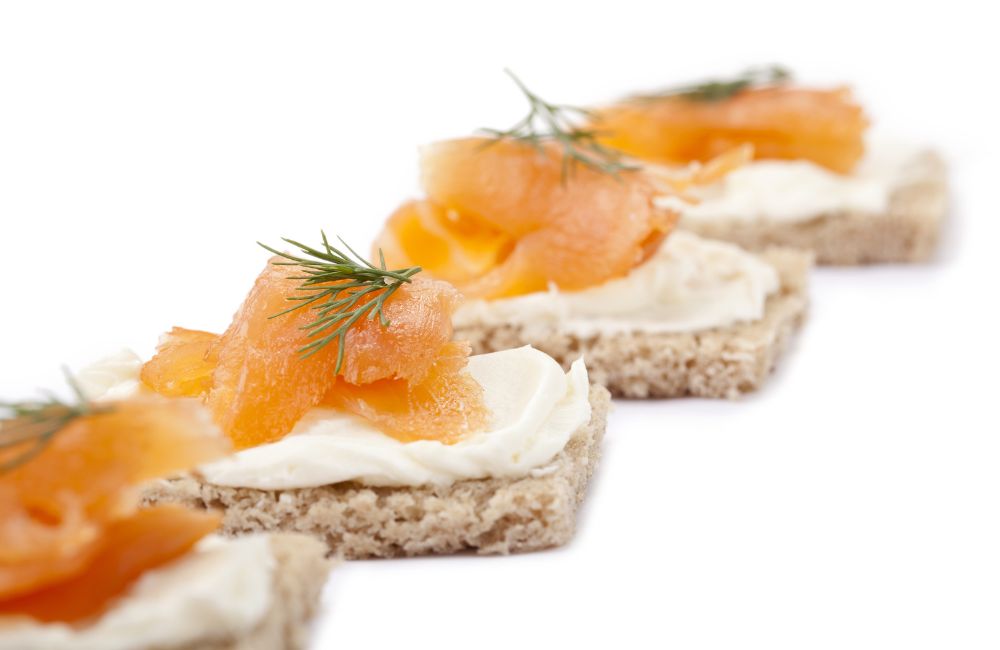
Creative Variations, Pairings, And Presentation
Once fundamentals are mastered, creativity flourishes with salmon canapes. Explore flavors, smart pairings, and clever logistics that keep service smooth, while plating techniques heighten anticipation and spark conversation at gatherings.
Global Twists And Regional Inspirations
Travel the world in a bite by reframing salmon through place. Scandinavian gravlax welcomes rye crisps, caraway, and dill mustard. Japanese-leaning versions pair shiso, wasabi crème, and pickled daikon.
Mediterranean ideas invite fennel pollen, preserved lemon, and olive oil. Peruvian brightness with ají amarillo and lime also charms. When salmon canapes carry a cultural cue, keep elements legible and respectful, textures, aromatics, and salinity echoing the source cuisine rather than collapsing into muddled, pan-flavor generality.
Beverage Pairings That Elevate Each Bite
No single drink suits every expression, so map pairings to preparation. Cold-smoked versions love Brut Champagne, Blanc de Blancs, or mineral Chablis, which slice through oil and accent salinity.
Cured styles embrace aromatic whites, dry Riesling, Grüner Veltliner, or a precise gin martini with citrus zest. For zero-proof service, try verjus spritzers, chilled sencha, or saline cucumber tonics. Align intensity: delicate bites prefer linear refreshment, while richer compositions welcome textured wines or pet-nats with gentle phenolics.
Make-Ahead Prep And Efficient Service
Success at scale starts with mise en place. Pre-slice fish, whip creams, cut bases, and store components separately to protect texture. Assemble close to service, brushing bases with a whisper of butter or oil to resist moisture.
Stagger trays and cover loosely to avoid condensation. Label station bins and tools so helpers replicate proportions. With tidy workflows, salmon canapes land crisp, cool, and consistent, even across an hour of steady passing.
Plating, Garnishing, And Visual Flow
Guests eat first with their eyes, so arrange in arcs or color gradients to guide attention. Negative space keeps trays elegant and handling easy. Build focal points: a single herb tip pointing skyward, a precise roe constellation, or a lemon thread catching light.
Anchor garnishes with tiny dabs of cream to prevent roll-off. Offer clear pickup paths and replenish in small waves to preserve sheen, chill, and structural integrity.
Dietary Adaptations Without Compromise
Adaptations thrive when they are intentional. For gluten-free service, use polenta coins, rice crackers, or roasted potato rounds. Dairy-light approaches swap crème fraîche for silken tofu whipped with lemon and olive oil.
Kosher-friendly menus avoid mixing fish with dairy, leaning on herb oils, pickles, and citrus for lift. Vegan guests can enjoy beet-cured carrot or smoked tomato “lox.” Crafted thoughtfully, these variations echo the luxury of salmon canapes without feeling secondary.
Conclusion
Consider these principles a roadmap for creating salmon canapes that feel polished yet welcoming, the sort of bites guests remember long after the tray has passed. Start with impeccable fish and supportive bases, then conduct contrast, brightness, and temperature like sections of a small symphony, allowing each element its solo without overpowering the chorus. Are you looking for more salmon dishes? Check out our salmon laksa recipe next!