Last Updated on 2025-12-22 by Team Ideas24
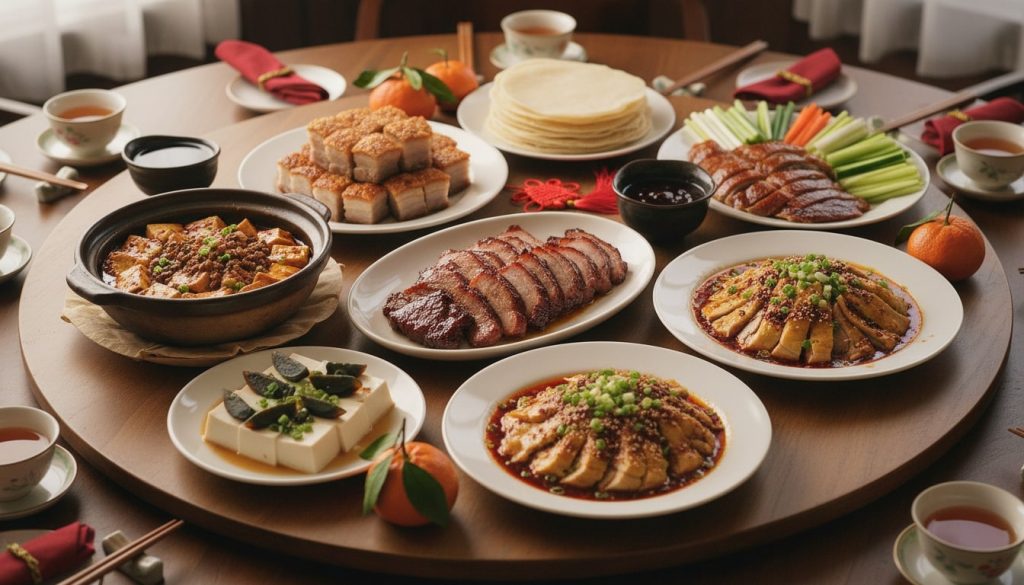
Chinese dishes lets you discover new flavors and introduce new food concept among your guests. Here is a secret. These amazing Chinese menu can be done right at your home. You just need the right recipe and ingredients for that succulent Char Siu or Cu Liu Tu Dou Si
As February approaches, try these Chinese New Year dishes at your next family gathering or any occasion.
Contents
Key Takeaways
- Chinese New Year dishes let you explore new flavors while giving your guests a meaningful, story-rich way to experience tradition at the table.
- You can recreate restaurant-level Chinese favorites at home with the right ingredients, which makes hosting feel impressive without needing a banquet hall.
- A memorable spread comes from balancing bold, generous mains with fresh, contrast-driven side dishes, so the meal feels festive, inviting, and easy to enjoy together.
Chinese New Year Dishes Entree
Chinese New Year dishes are all about exploring asian flavors. The colors, taste, and aroma create a unique experience for families and guests. They are also great as lunch or dinner staples when everyone is tired of the common meat loaf or pasta meal.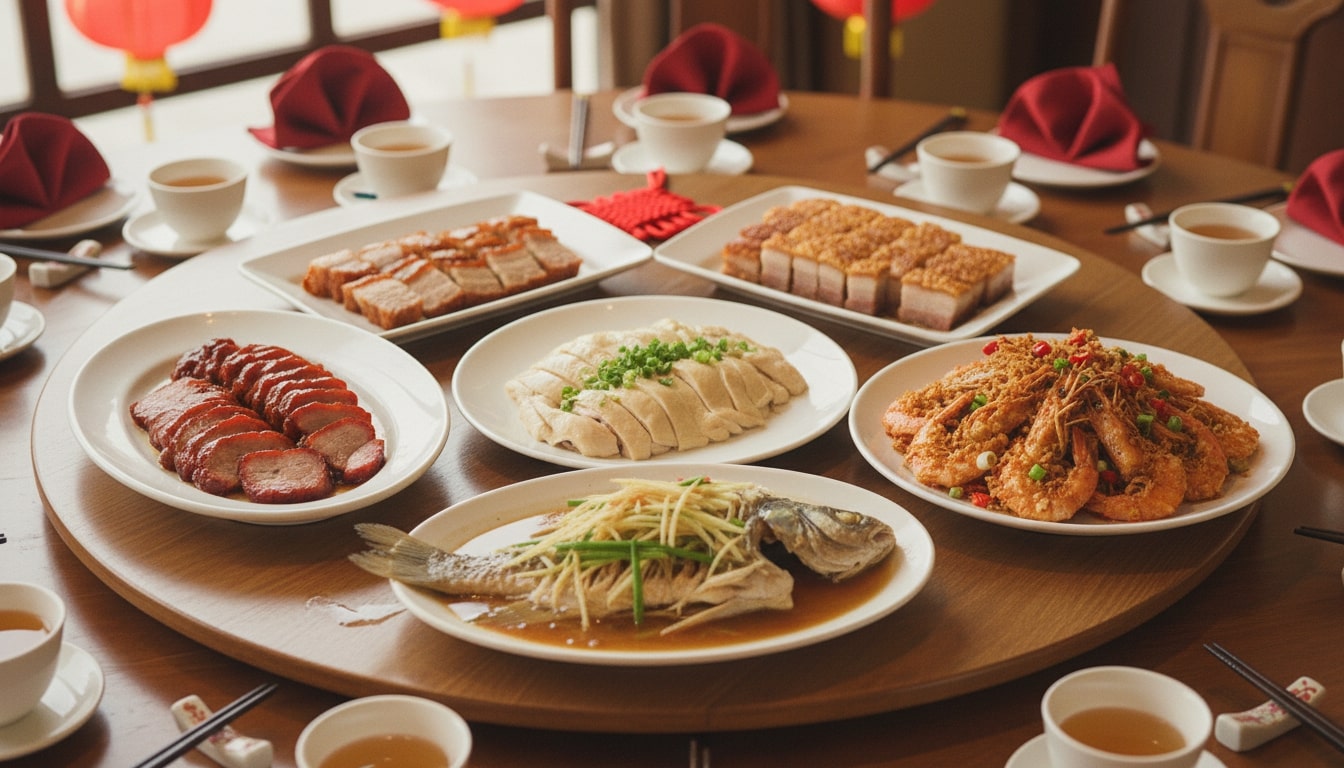
Char Siu (Cantonese Barbecued Pork, 叉烧)
Char Siu (Cantonese Barbecued Pork, 叉烧) is the signature meat you likely saw in movies showing Hong Kong food hawkers. The iconic mahogany roasted pork promises a bite of sweet and juicy meat that almost melts in your mouth. It also has that strong, savory, and tangy flavor, which goes well with rice.
The beauty of Chari Siu is how you do not need any complicated ingredients or techniques. It simply demands time for the flavors to be injected and for the meat to be cooked to a tender texture.
Siu Yuk (Cantonese Crispy Roast Pork Belly, 烧肉)
Siu Yuk (Cantonese Crispy Roast Pork Belly, 烧肉) is a dramatic mix of crunchy and juice textures. You have the fried skin that cracks with each bite while the underlying meat is soft to the teeth. Siu Yuk is a symphony of contrasting textures when paired with the right savory sauce.
While we are presenting Siu Yuk as an entree, it also holds up well as a side dish. Cut into small crunchy cubes, this pork dish can be served along with other Chinese New Year dishes in this article.
Bai Qie Ji (Cantonese White Cut Chicken, 白切鸡)
Bai Qie Ji (Cantonese White Cut Chicken, 白切鸡) is a celebration of the chicken itself. With some salt and ginger, Bai Qie Ji lets you fully taste the chicken’s natural sweetness. Consider this Chinese New Year dish when you just bought some fresh or high-quality chickens from your local butcher.
Keep in mind that Bai Qie Ji still delivers the flavor of asian through its sauces. There is the classic Geung Yung or ginger scallion sauce that is packed with soft heat. You can also mix soy sauce with sugar, chopped ginger, chopped garlic, and sesame oil for a sweet savory flavor in each bite.
Qing Zheng Yu (Cantonese-Style Steamed Whole Fish, 清蒸鱼)
Qing Zheng Yu (Cantonese-Style Steamed Whole Fish, 清蒸鱼) arrives at the table looking whole and deliberate, a symbol of plenitude and continuity, and the flavour is bright and delicate, with the fish doing all the heavy lifting.
It’s refreshing enough to cut the richness of other dishes and a dream to photograph. Families like to order it for its auspicious meaning, its restrained sophistication, and its power to round out a celebratory feast.
Jiao Yan Xia (Salt And Pepper Prawns, 椒盐虾)
Jiao Yan Xia (Salt And Pepper Prawns, 椒盐虾) are vibrant and tantalising, with an aromatic crust that crackles the moment you bite into it, and the prawns feel cheerful yet exclusive, spreading colour and energy around the table.
At the same time, their radiance stirs the appetite and fuels conversation. Hosts choose them for their festive appearance, their instant appeal to both children and adults, and the convivial snacking tempo that they infuse into the party.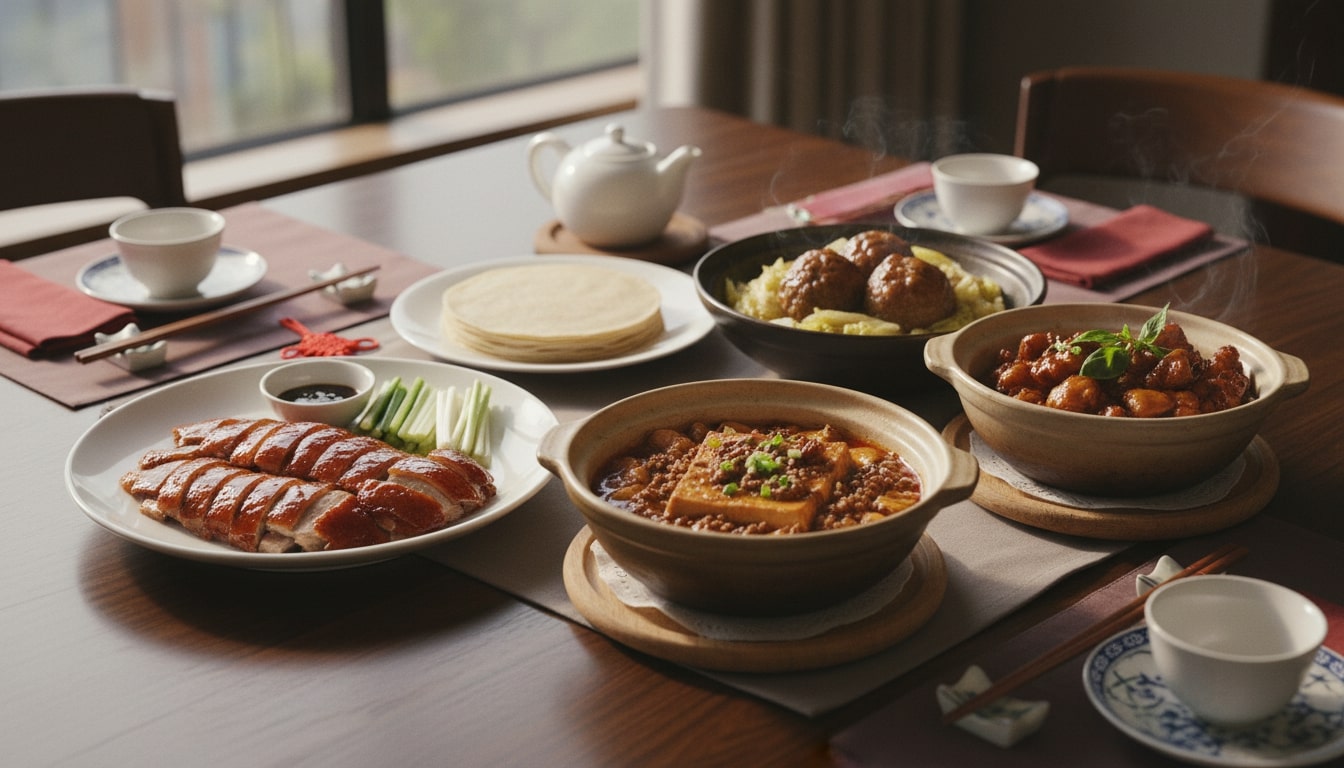
Peking Duck (Roast Duck With Pancakes, 北京烤鸭)
Peking Duck is elegant and playful, and its skin is brown and lustrous, its flesh is pink, so it is accompanied by thin crepes, scallions, and dipping sauce. Each mouthful is an event, and it gets all heads at the table turning.
Therefore, it encourages sharing and turns the meal into a celebration, and diners order it for its entertainment value, contrasting textures and ability to turn a meal into a party without overwhelming the rest of the menu.
Mapo Tofu With Pork (Mapo Tofu With Pork, 麻婆豆腐)
Mapo Tofu is fiery and pungent, and it stimulates the palate and livens up the meal, thus silky tofu and savory pork are bathed in a vibrant, flavorful sauce. It deserves a place as a main course because it feeds a crowd, pairs well with rice and vegetables, and is universally appealing, so diners order it for its festive quality and comfort in every bite.
San Bei Ji (Three-Cup Chicken, 三杯鸡)
San Bei Ji is assertive, lustrous and aromatic, and when you lay it down, you can smell the basil, therefore the sauce coats each piece and has a sweet, salty flavor. It contrasts well with fatty roasts and seafood without overpowering them, and chefs appreciate it because it’s difficult to resist, tastes good to all, and keeps people chatting and eating.
Shi Zi You (Lion’s Head Meatballs, 狮子头)
Lion’s Head Meatballs are large, pillowy, and very soothing, and they are typically served with greens that provide freshness, thus they look pretty on the plate and give the meal an air of celebration and care. The dish is formal yet homey, making it ideal for New Year’s gatherings because people prepare it for its tenderness, its appearance, and its blend of elegant presentation and familial comfort.
Zhēng Jī Xiānggū (Steamed Chicken With Mushrooms, 香菇蒸鸡)
Steamed Chicken With Mushrooms is delicate, aromatic, and somewhat fancy, and the earthy sweetness of the mushrooms complements the delicate flavor of the chicken, balancing out heavier main courses but still standing out as a star dish, so it’s also visually tidy and appealing, and the broth-like juices are refreshing between more intense dishes. Hosts serve it because it demonstrates care for their guests and rounds out the table with grace rather than heft.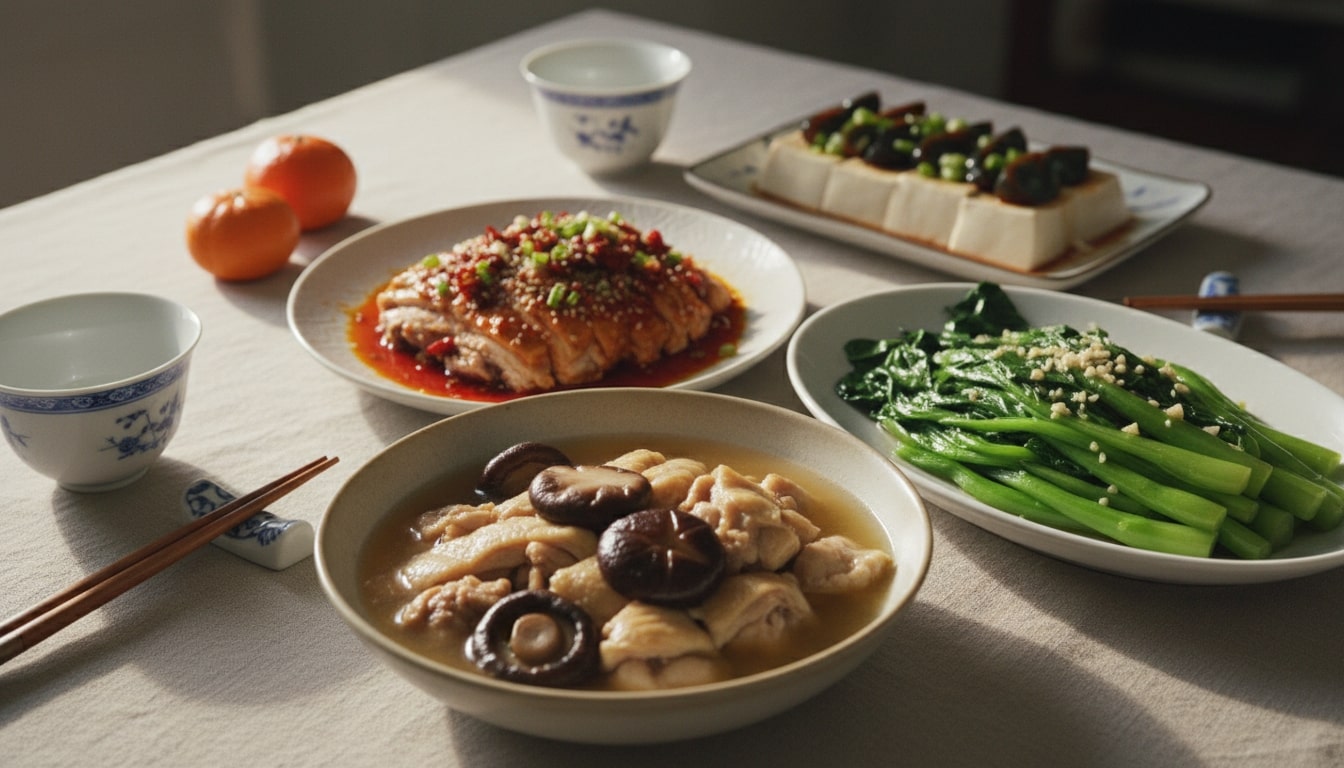
Chinese New Year Side Dishes
The best side dishes bring color, contrast, and a sense of care to the table without competing with the mains. These classics add freshness, texture, and meaning while keeping the celebration relaxed.
Qing Chao Jie Lan (Gai Lan With Garlic, 清炒芥蓝)
This simple vegetable dish delivers crisp-tender stalks and glossy greens with a gentle garlic perfume. Its clean flavor resets the palate between richer bites and keeps the meal feeling balanced.
The vivid green color looks celebratory on a shared platter, and the pleasing crunch invites guests to keep grazing. Home cooks choose it because it plays well with everything on the table and signals abundance through freshness rather than heft. It is understated in the best way and quietly essential.
Kou Shui Ji (Mouthwatering Chicken, 口水鸡)
Mouthwatering Chicken is a chilled Sichuan staple with tender slices dressed in a fragrant, crimson sauce that is nutty, tingly, and gently sweet. The dish introduces sparkle and contrast to a festive spread, offering cool textures and bright aromatics that wake up the palate. Its dramatic color feels party-ready, and the balance of heat and perfume invites another bite. Hosts serve it because it travels well, slices neatly, and adds a confident, contemporary note to tradition.
Pi Dan Dou Fu (Century Egg Tofu, 皮蛋豆腐)
Silken tofu topped with century egg, soy, and aromatics is delicate, cool, and deeply savory. The tofu’s custardy texture contrasts with the jammy yolk and mineral richness of the preserved egg, creating a composed bite that feels refined without fuss.
It brings a quiet elegance to the table and gives guests a refreshing pause between bold flavors. Many choose it for its effortless plating, subtle complexity, and the way it flatters both seafood and roasted meats.
Cu Liu Tu Dou Si (Vinegar-Sizzled Shredded Potatoes, 醋溜土豆丝)
Shredded potato with black vinegar is crisp, tangy, and lightly spicy, with strands that stay snappy and bright. The lively acidity cuts through rich dishes and keeps the menu feeling energetic.
Its texture adds a playful counterpoint to softer items on the table, and the sheen of vinegar gives a festive gloss. Cooks reach for it because it feels homely yet distinctive, travels beautifully, and invites conversation about regional flavors without weighing down the plate.
Suan Rong Fen Si Zheng Shan Bei (Garlic Vermicelli Steamed Scallops, 蒜蓉粉丝蒸扇贝)
Garlic vermicelli steamed scallops arrive in their shells with translucent noodles soaking up briny-sweet juices. The presentation is unmistakably celebratory, yet the flavor stays light and fragrant, perfect alongside heavier mains.
Each shell feels like a small gift, encouraging guests to savor slowly. Hosts love this side because it looks abundant in a single platter and adds oceanic freshness without overwhelming the table. It reads as luxurious while remaining graceful and balanced.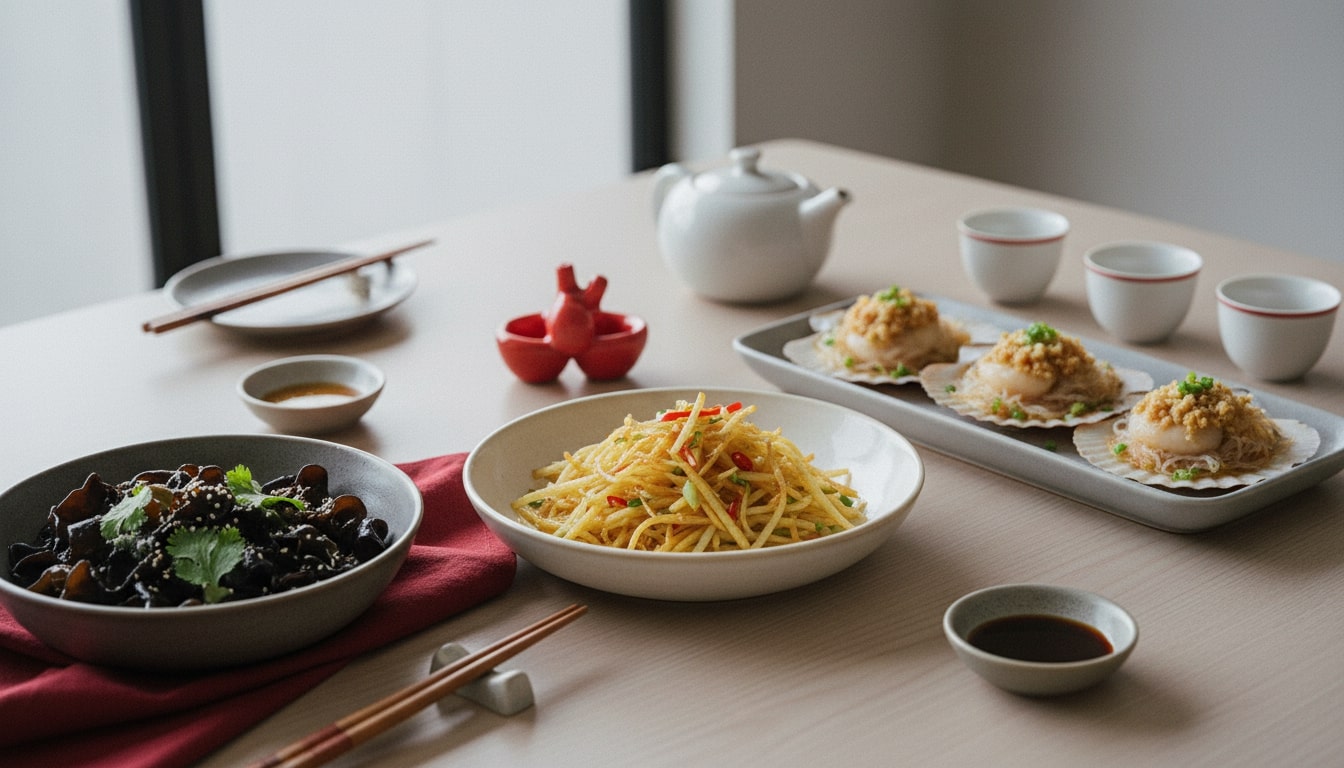
Liang Ban Mu Er (Cold Dressed Wood Ear Mushrooms, 凉拌木耳)
Smashed cucumber with garlic and sesame oil is crisp, cooling, and lightly seasoned, the sort of side that quietly rescues the palate during a long feast. The irregular pieces soak up dressing, giving each bite a refreshing snap and a hint of savoriness. Its jade tones brighten the spread, and the dish brings a casual, convivial touch to a formal meal. People choose it for its instant appeal, clean finish, and the way it harmonizes with almost everything.
Conclusion
What makes Chinese New Year dishes special is the memory, the meaning, the magnanimity, because when we set out to create the perfect Chinese New Year spread, it’s not the food itself that makes a table feel like a party, but rather, it’s the meaning behind it, and the people you share it with. Here are a few principles to keep in mind: a good spread should feel like a feast, but not so much that it makes the cook feel enslaved to the kitchen.
FAQ: Chinese new Year Dishes
- How Many Dishes Should I Serve For A Small Chinese New Year Table?
- Aim for variety more than volume, because guests remember contrast. A simple spread often feels complete with one showy centerpiece, one lighter protein, one vegetable-forward side, one starch, and something sweet. If you like symbolism, many families prefer an even number to signal pairs and togetherness.
- Do I Have To Cook Only Traditional Dishes For It To “Count”?
- No, because the spirit matters more than strict rules. Keep one or two symbolic anchors, like fish for abundance or long noodles for longevity, then add dishes your guests genuinely love. That mix feels personal and still respectful, which is often what people remember most.
- What Are A Few Easy Chinese New Year Serving Etiquette Points?
- Serve elders first when you can, because it signals respect without any speech. Many families present fish whole and leave a small portion, which nods to the idea of surplus. People also avoid cutting long noodles at the table, since the length represents longevity.
- How Can I Keep The Menu Friendly For Dietary Restrictions?
- Build the table around mix-and-match plates, so guests can choose comfortably. Add one tofu or mushroom-based dish, one seafood option, and at least one simple vegetable side. Keep sauces separate when possible, and label anything with shellfish, peanuts, sesame, or gluten-containing soy sauce.
- What Are The Best Chinese New Year Dishes For Leftovers?
- Choose mains that stay flavorful after chilling, because the holiday often stretches across visits and meals. Roast meats, braised dishes, and cold plates usually reheat or serve well the next day, while steamed fish tastes best fresh. Leftovers also make easy lunches, which saves effort during a busy week.