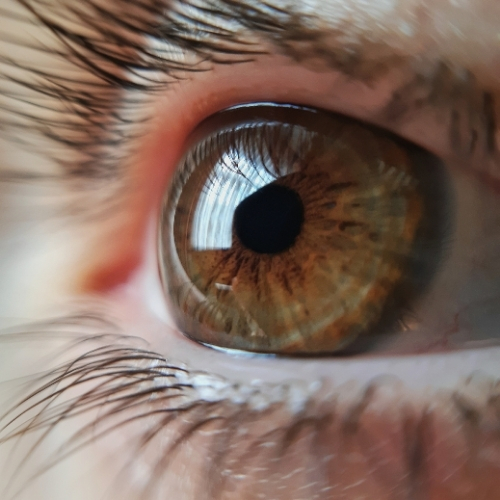
Imagine being told you’ll likely never see clearly again, and then, thanks to a tiny piece of lab-grown tissue, the world comes back into focus. That’s what this new breakthrough in eye surgery is promising for millions of people worldwide.
In Israel, doctors have successfully implanted the first 3D‑printed, lab-grown human cornea, called PB‑001, into a patient who was legally blind, fully restoring their sight. Instead of relying on a whole donor cornea from another person, this new approach uses human corneal cells grown in the lab and then precisely 3D‑printed into a transparent, ultra-thin corneal implant.
Why is this such a big deal? Because right now, for every one donated cornea, an estimated 70 people need one. Precise Bio, the North Carolina–based company behind PB‑001, believes its method could turn a single donated cornea into hundreds of lab-grown grafts. That’s the standout benefit: one gift of tissue could help not just one person, but potentially an entire waiting list.
As Aryeh Batt, Precise Bio’s co-founder and CEO, explains, “This achievement marks a turning point for regenerative ophthalmology, a moment of real hope for millions living with corneal blindness.”
It’s not just a technical milestone; it’s about giving people back the independence and everyday joys most of us take for granted, reading a recipe, seeing a grandchild’s face, driving safely at night.
The surgery itself fits into existing workflows: PB‑001 is shipped frozen, arrives pre-loaded on standard devices, and gently unrolls into place, forming a natural corneal shape. It’s designed to match the clarity, transparency, and strength of a real cornea and to integrate with the patient’s own tissue.
The first human transplant took place on October 29, and early results are so promising that doctors are calling it nothing less than transformative. As surgeon Dr. Michael Mimouni put it, “This is a game changer. We’ve witnessed a cornea created in the lab, from living human cells, bring sight back to a human being.”
This kind of progress matters on multiple levels. It points to a future where a loved one’s eye injury, infection, or age‑related corneal disease doesn’t automatically mean a lifetime of impaired vision or a desperate wait for a rare donor match. It’s also a glimpse of where medicine is headed: personalized, regenerative, and far less limited by scarcity.
As Anthony Atala, M.D., co-founder of Precise Bio, says, the ability to produce “patient-ready tissue on demand could lead the way towards reshaping transplant medicine as we know it.”
Want the full story, and all the hopeful details? Check out the complete article on this remarkable “lab-grown sight” breakthrough.