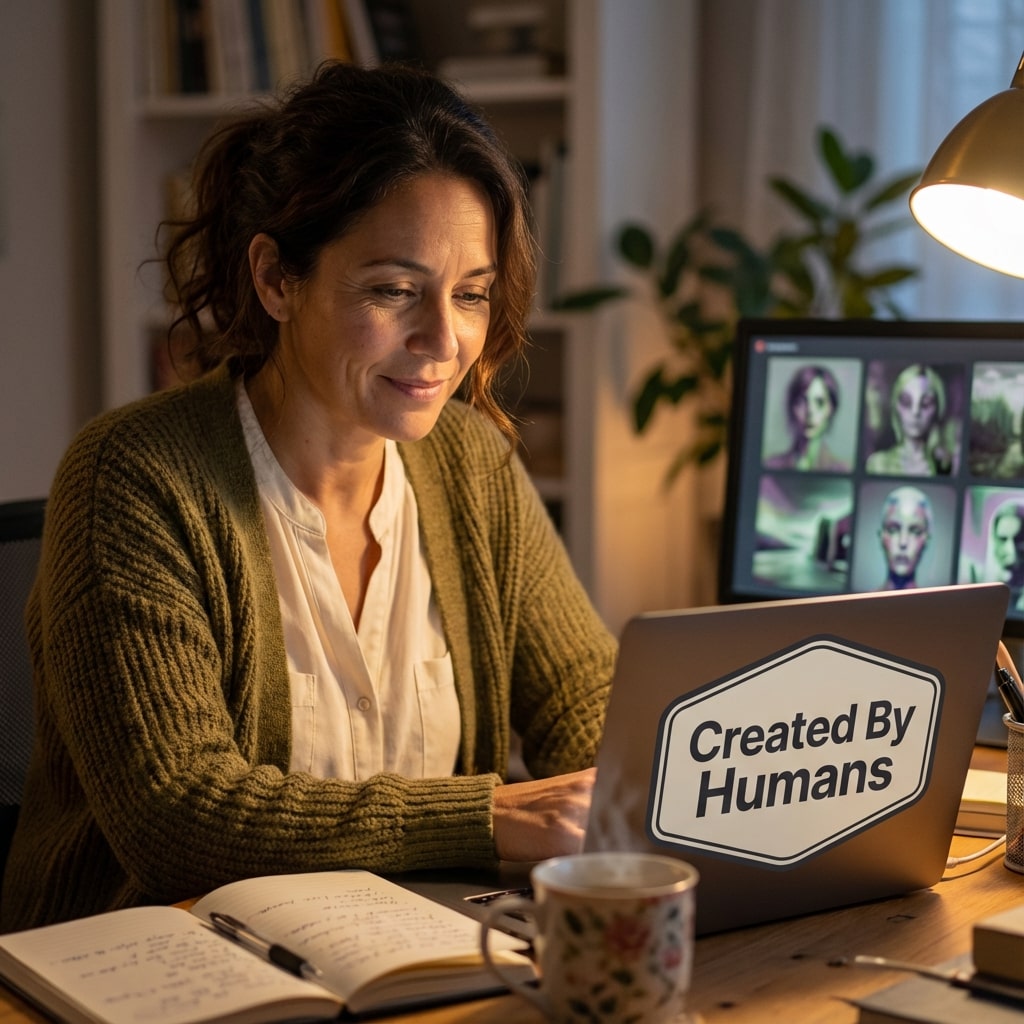
If your feeds feel a little more fake lately, you are not imagining it. A report on the “anti AI” marketing argues that after years of hype, people are tired of wading through AI-generated slop and are craving something simpler and more reassuring. The truly interesting twist is not that AI is going away, but that “100% human” is quietly becoming a premium brand in its own right.
There is a growing backlash against AI in everyday life. From TikTok videos you cannot quite trust to real estate listings that read like a bot’s fever dream, our confidence in what we see online is eroding. Merriam-Webster even chose “slop” as its 2025 word of the year to capture that feeling of low quality, AI-generated junk creeping into everything.
This rising discomfort is exactly why brands are starting to lean into a very old-fashioned promise: real people did this.
One standout example is iHeartMedia, which has introduced a “guaranteed human” tagline and pledged not to use AI generated hosts or music. Their research found that 90 percent of listeners still want their media made by humans, even if they use AI tools themselves.
As CEO Bob Pittman puts it, “Consumers are not just looking for convenience, they are searching for meaning.” That sentence lands especially strongly for women who juggle work, family and information overload, and who want to feel that the voices in their ears are genuine, not synthetic.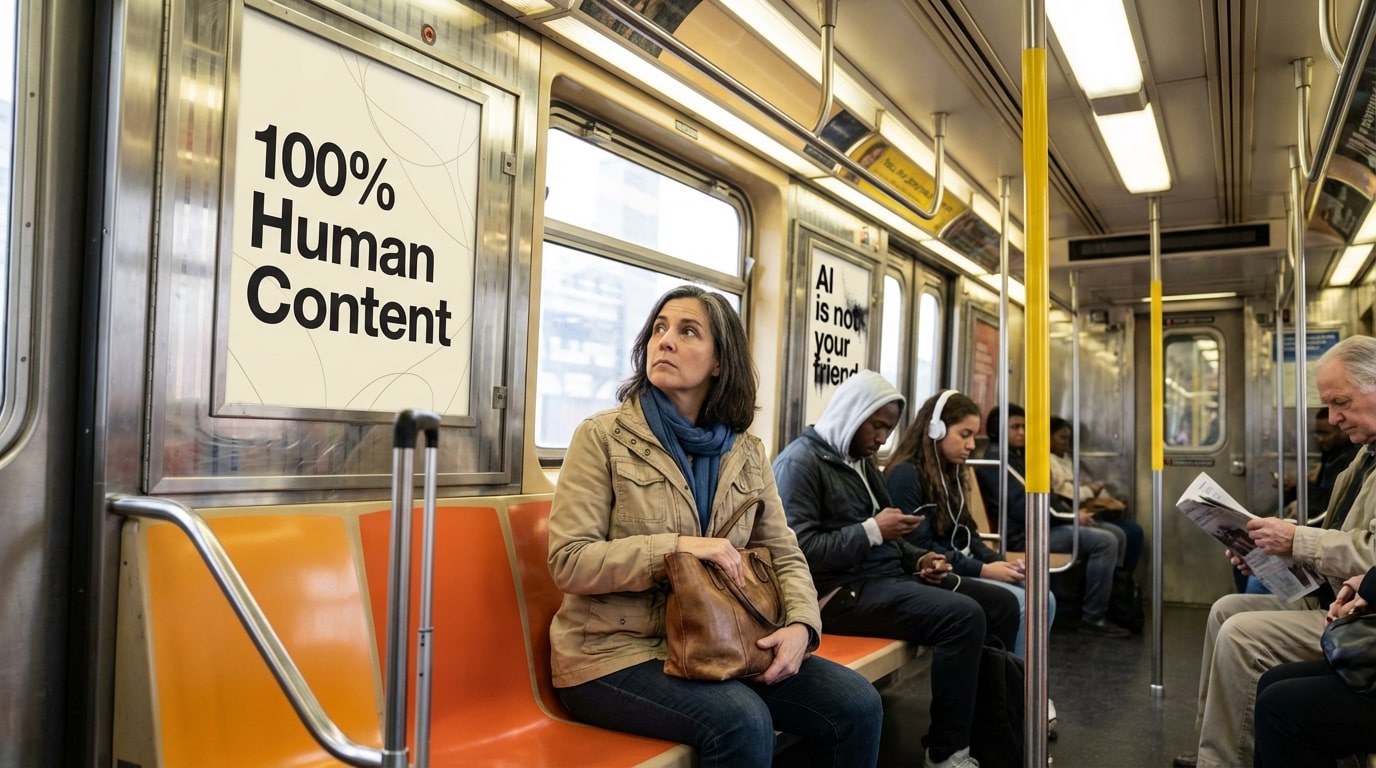
The shift is showing up across culture. A hit Apple TV show tells viewers in the credits that it was “made by humans.” A Canadian newsroom has adopted a strict no AI policy for its journalism. On the streets of New York, ads for a wearable AI device are getting defaced with messages like “AI is not your friend.”
Even dedicated Pinterest users, often women planning weddings, outfits, and home projects, are pushing back as AI reshapes the platform they once trusted for real-world inspiration.
What makes this moment noteworthy is not simple fear of technology. It is the realization that trust, intimacy, and a sense of human care can become a selling point in a world flooded with convincing fakes and error-prone bots.
For women over 35 who already filter so much noise in their daily lives, “created by humans” may soon feel like the digital equivalent of organic, fair trade or locally made. It signals something that has taken time, judgment and real lived experience to produce.
If you want to see how this anti AI mood is bubbling up across media, tech platforms and city streets, the full story is well worth a read on CNN Business.