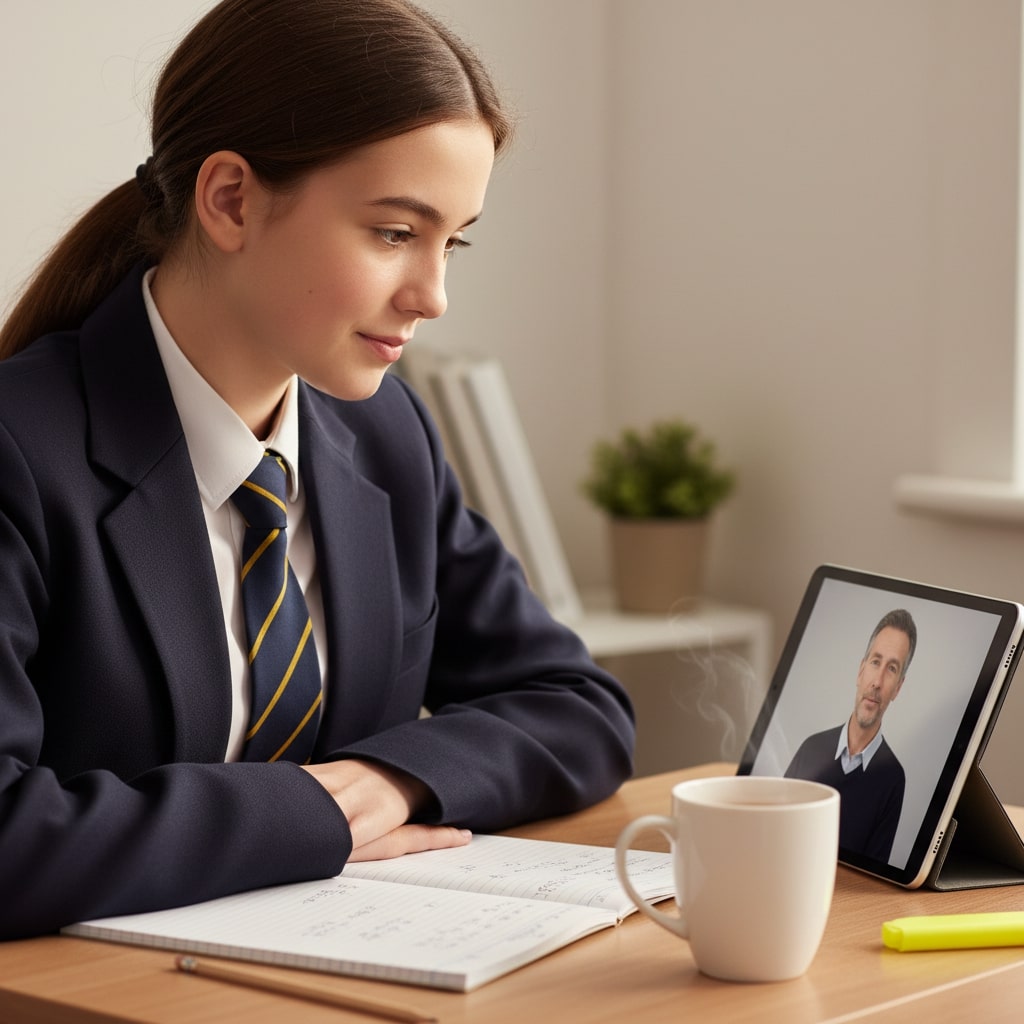
AI has officially taken a seat at the front of the UK classroom, sometimes as a lifelike teacher avatar and sometimes as a specialist teacher on a screen hundreds of miles away. As reported by BBC News, schools are testing deepfake-style video avatars that deliver bespoke feedback to each pupil, while AI systems help mark mock exams and spot learning gaps.
The promise: less late-night marking for teachers, more consistent, personalised guidance for students, and a pragmatic answer to persistent shortages in specialist subjects like maths.
At the Great Schools Trust, the model is striking: teachers can use AI to mark assessments, receive clear diagnostics on where pupils are struggling, and then have the avatar generate tailored video feedback for every child, while the classroom teacher focuses on relationships, coaching, and confidence-building. It’s a hybrid vision that treats AI as a leveller, not a replacement.
And adoption is growing: Teacher Tapp data shows that teachers using AI in their work jumped from 31% in October 2024 to 58% in October 2025. Meanwhile, more than 40,000 teachers tried Oak National Academy’s experimental AI lesson planning tool.
But not everyone is convinced. At The Valley Leadership Academy in Lancashire, where a remote maths teacher has been delivering lessons from Devon, teachers have gone on strike, and concerns about the loss of human connection are front and centre.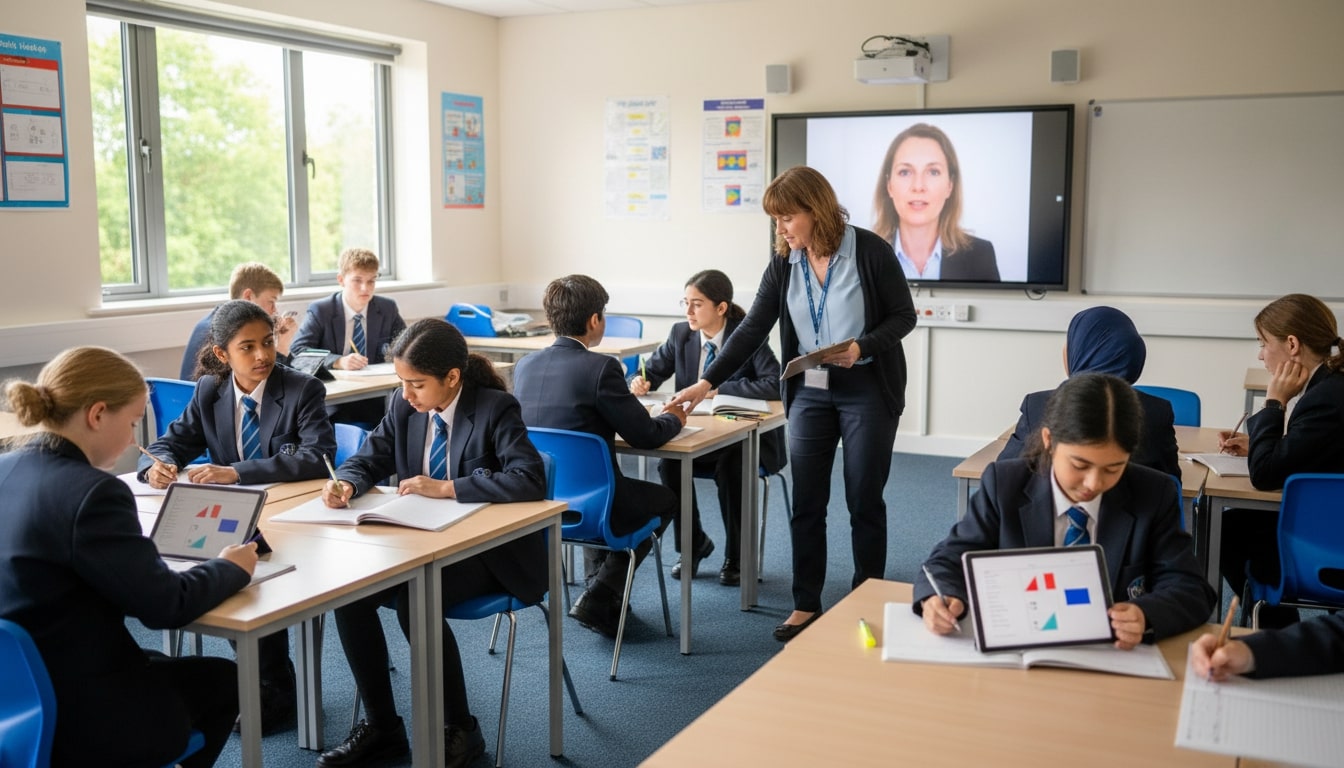
Maths teacher Emily Cooke captures the heart of that worry: “Will your virtual teacher be there to dance with you at prom, hug your mum during results day, or high-five you in the corridor because they know you won the match last night?” It’s a powerful reminder that education is as much about belonging and encouragement as it is about content coverage.
Why this matters now: families and schools are navigating a tightrope, balancing screen time and safeguarding with the very real benefits of targeted support and reduced workload. Done thoughtfully, AI could free teachers to do more of the high-impact work only humans can do: mentoring, motivating, and making learning feel personal.
The Department for Education’s stance is clear, technology should enhance, not replace, deep thinking and creativity, and several schools are testing precisely that balance with structured, in-school setups and strong teacher oversight.
Curious how this hybrid model actually plays out, and what parents, unions, and school leaders all say? Read the full piece for the nuance and next steps in this fast-evolving space: BBC News.